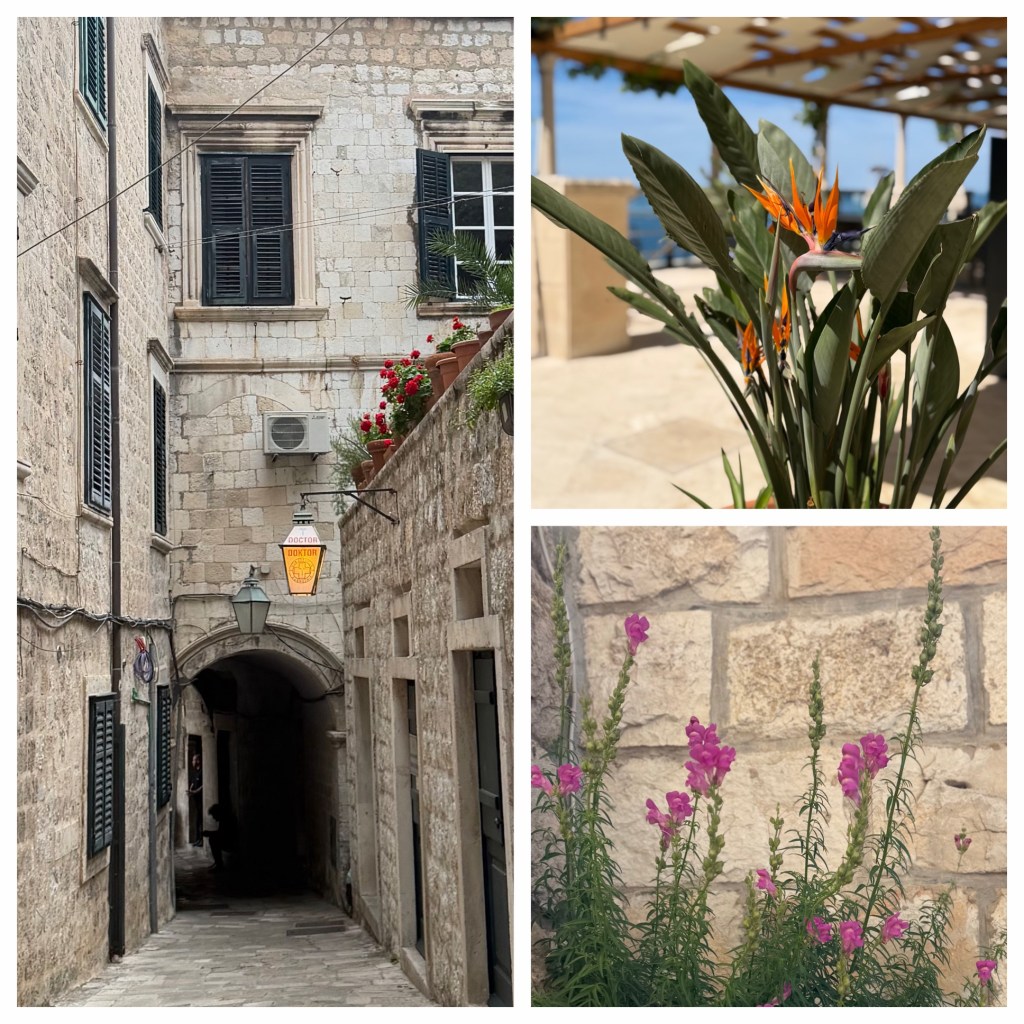
Ever since I was in high school and my cousin went to Dubrovnik, Yugoslavia, I’ve wanted to go see the gorgeous city and blue waters of the Adriatic Sea that she talked so much about. So when we decided to go with friends to London in May, we tacked on my bucket-list trip to Dubvronik.
I went for the physical beauty of the place and ended up discovering so much more.
My first discovery was that the city center or “Old City” is not, in fact, the center of the city with buildings on all sides. The coastline of Dubrovnik is jagged and the Old City sits on one of the peninsulas along the coast.
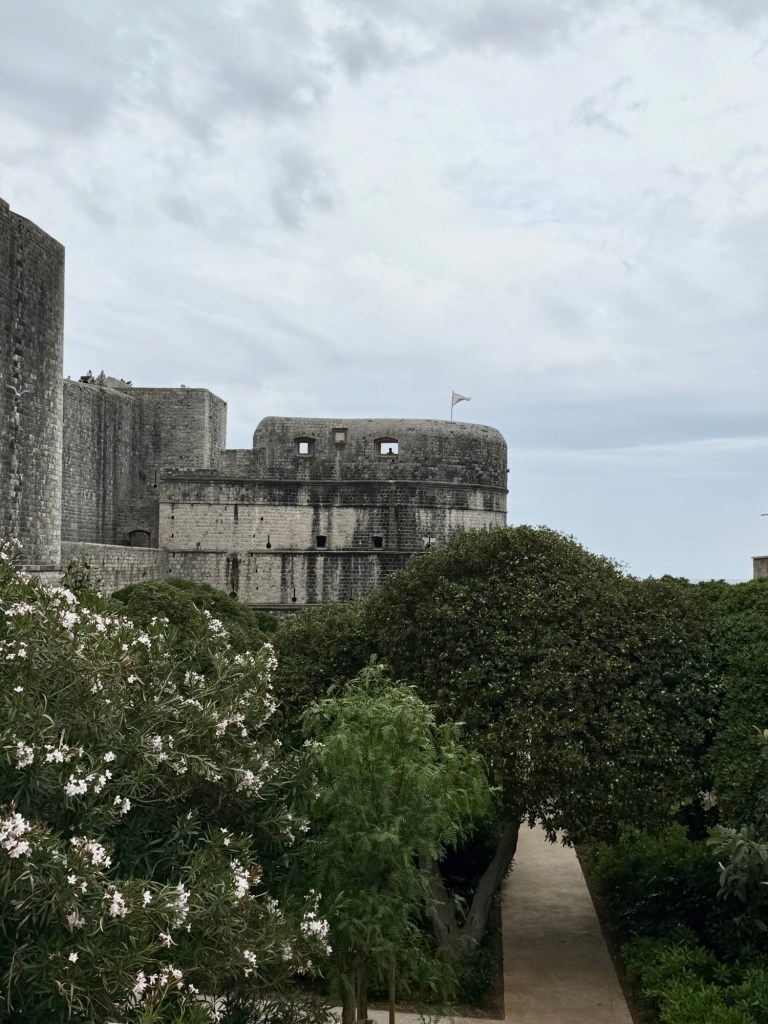
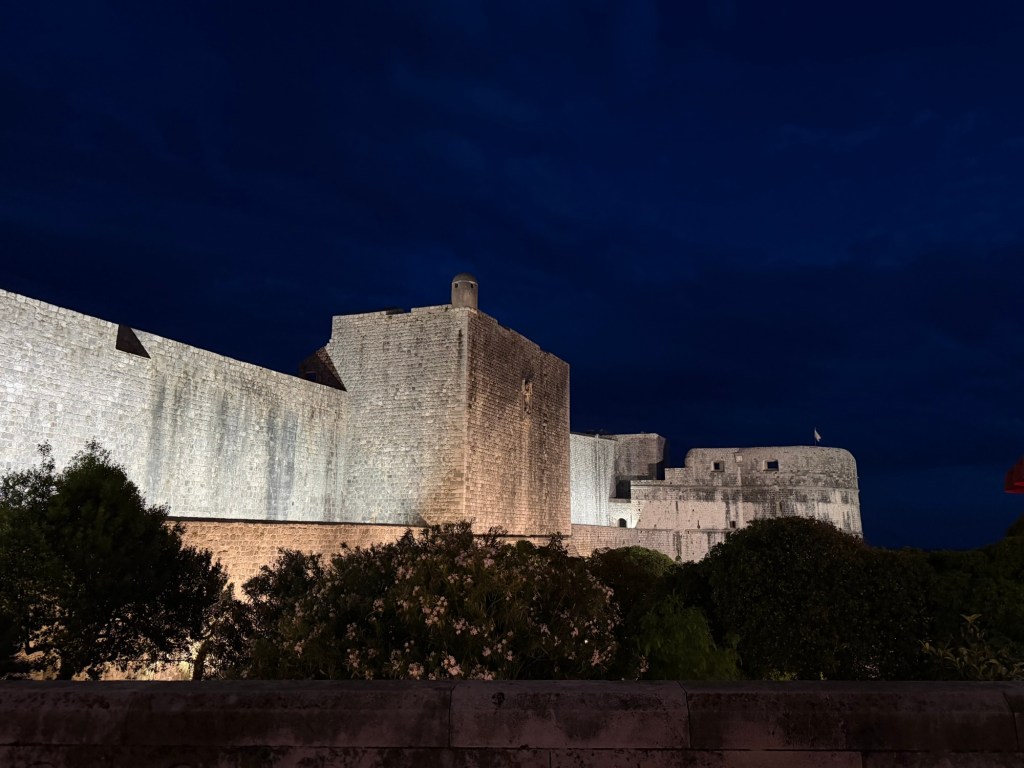
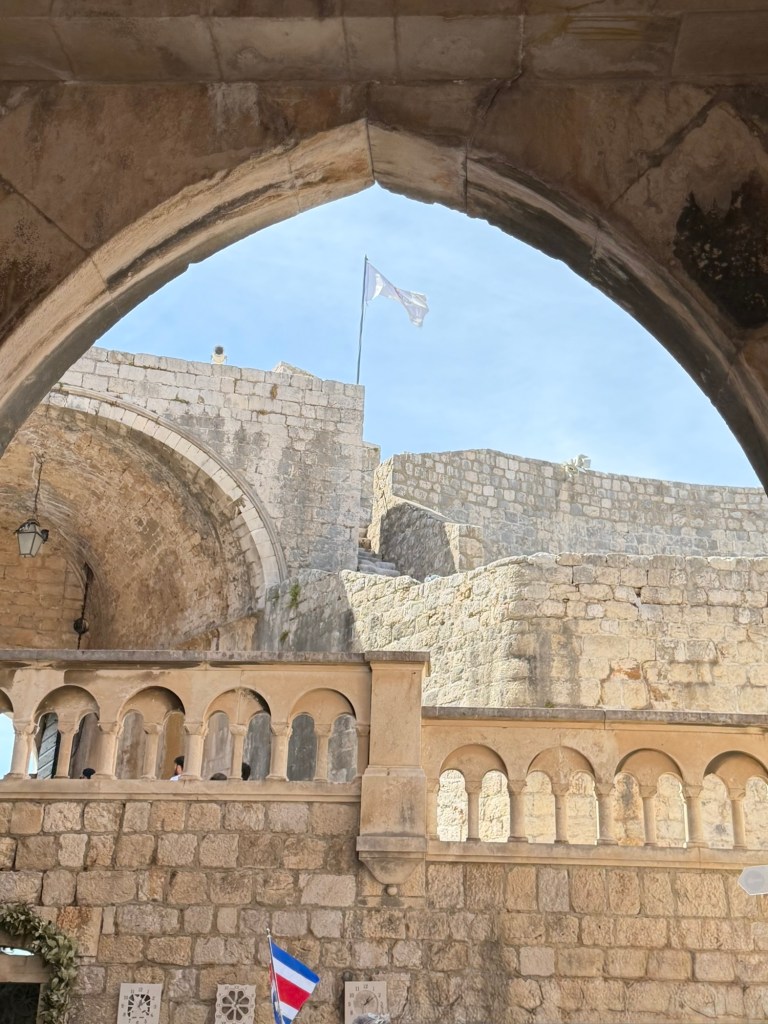
Dubrovnik was deemed a UNESCO World Heritage Site in 1979 and is one of the best preserved medieval walled cities in Europe. I learned that the area was first inhabited by Roman refugees settling on a rocky island in the 7th century. Over time, the channel between the island and the mainland was filled in creating today’s main street in Old Town.
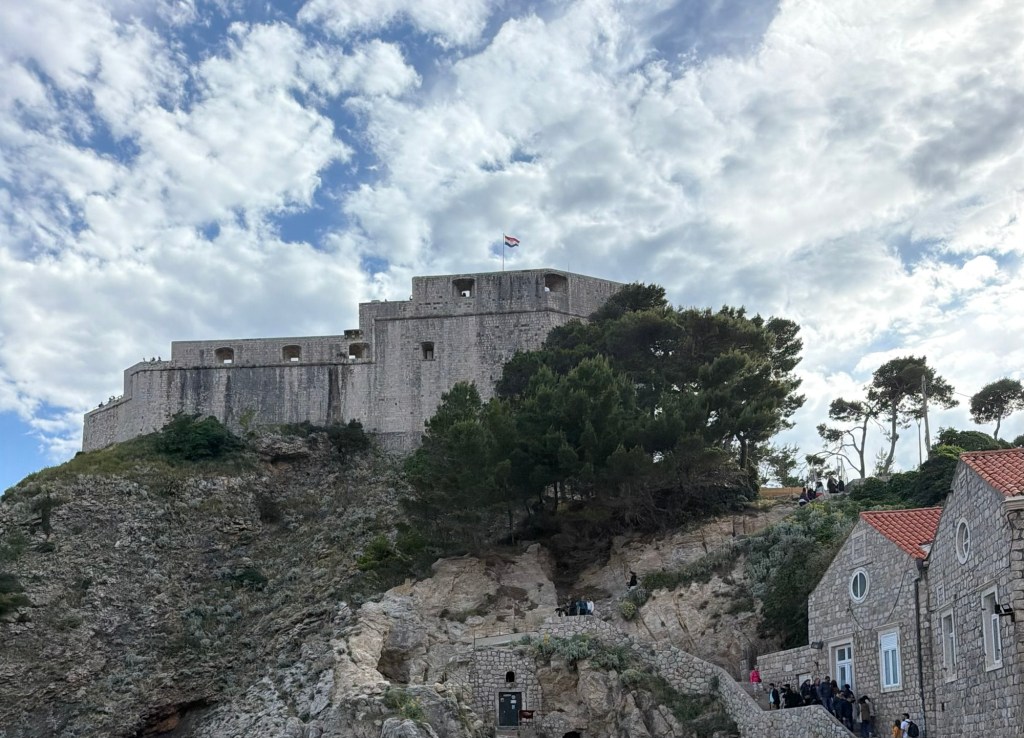
Between the 13th and 16th centuries Dubrovnik became the capital of the Republic of Ragasa. Although smaller than Venice, it became a wealthy shipping and trading center. Rather than relying on military might they remained independent by forging relationships with (I.e.paying money to) larger kingdoms including the Ottoman Empire. Our guide also told us they were great at espionage using priests as spies.
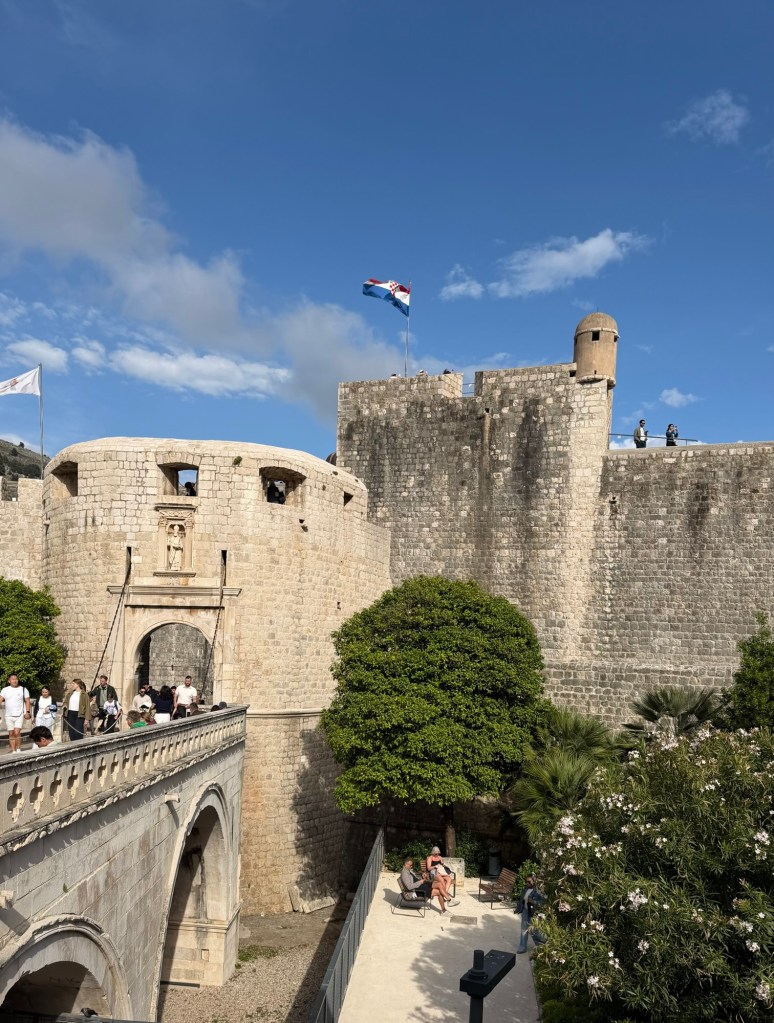
During this 450 year period the walls of the town were constructed and an aqueduct was built to bring fresh water to the city. This era was also when the city established one of Europe’s oldest pharmacies, created a quarantine system for arriving ships, and abolished the slave trade centuries before many other nations.
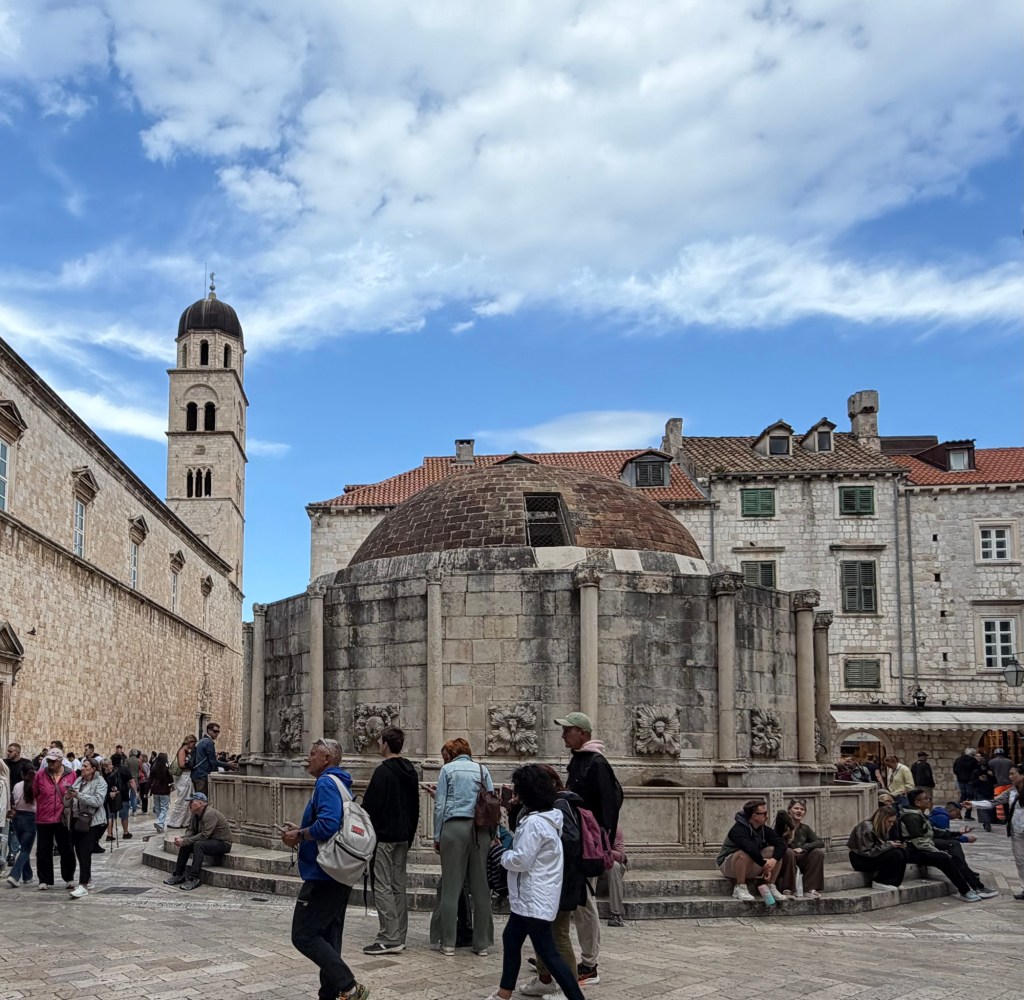
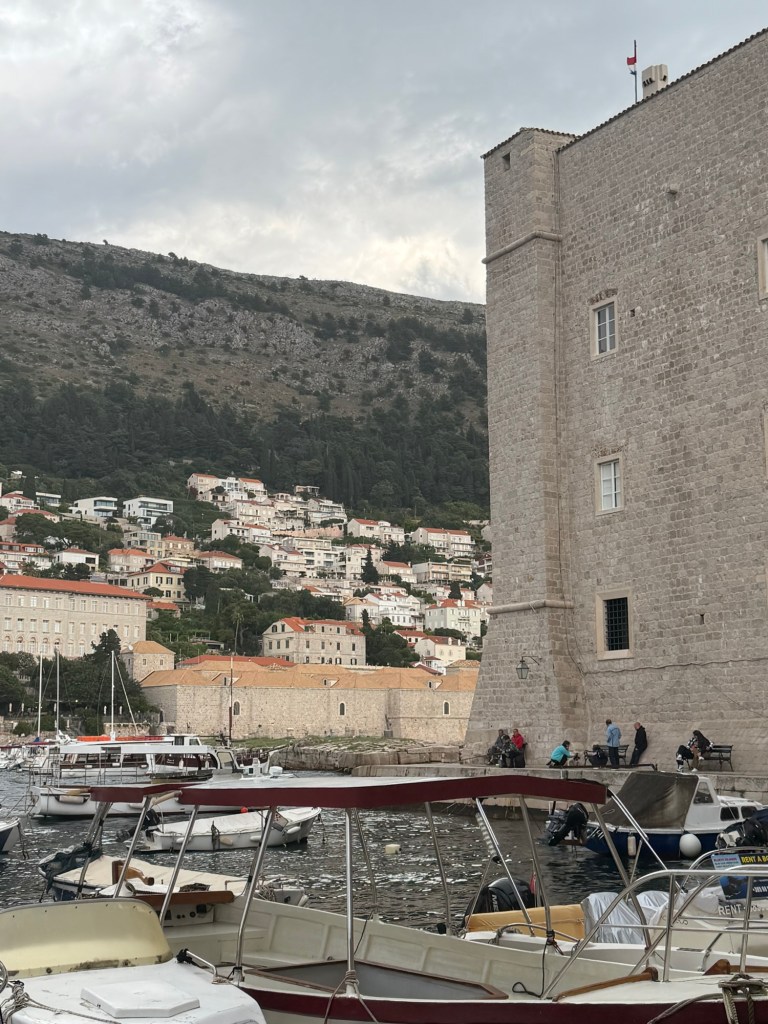
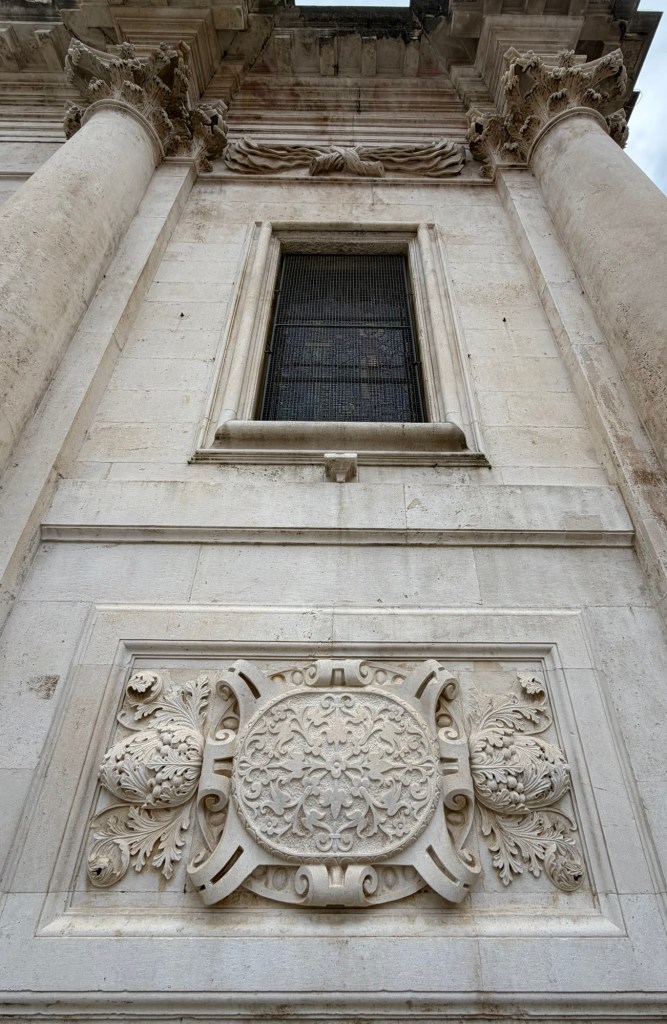
On April 6, 1667 an earthquake destroyed much of the newly constructed city and killed thousands of residents. The city was rebuilt in the Baroque style that was popular in that era.
They were still rebuilding after the earthquake when Napoleon took over the city/state of Dubrovnik/the Republic of Ragusa in 1808. Then after World War I the area became part of Yugoslavia which lasted for seventy years first as a monarchy and after World War II as a communist county.
Yugoslavia was an amalgamation of several cultures, religions and languages ruled mainly by the Serbs with the capital in Belgrade. The break up of Yugoslavia in the early 1990s was a bloodbath. Most notorious was the ethnic cleansing in Sarajevo of Bosnian Muslims by Serb paramilitary groups.
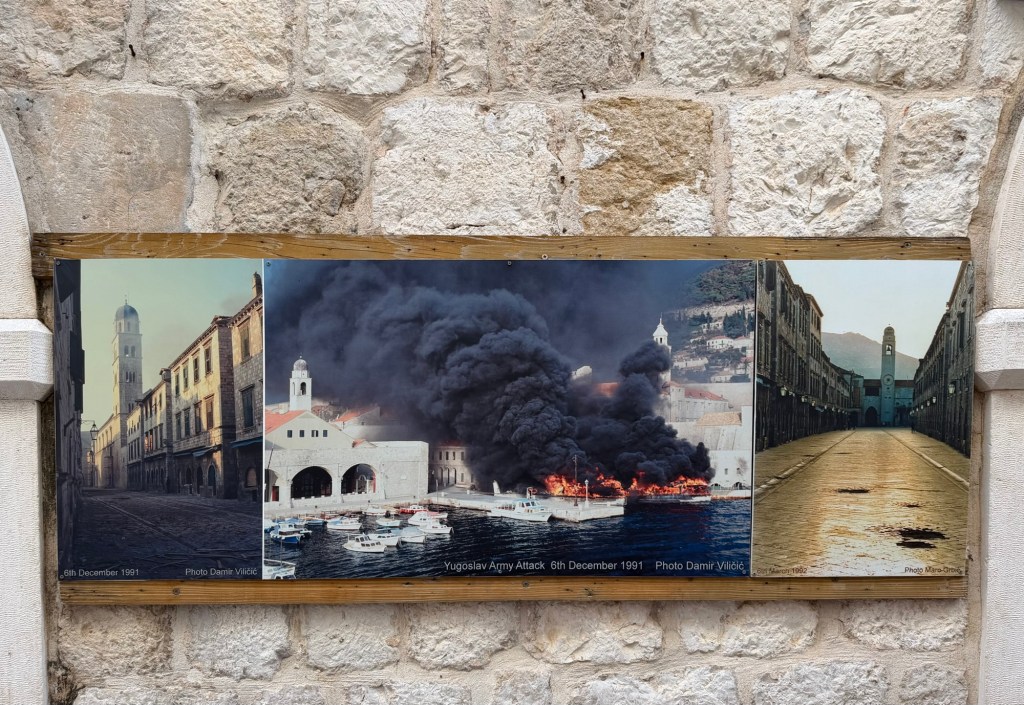
Citizens of Dubrovnik were impacted by The Croatian War of Independence from Yugoslavia in 1991 and 1992. The town was damaged in the war despite its UNESCO status. Many of the scars of war have since been repaired, but the difference in colors of roof tiles are a lasting reminder of the war.
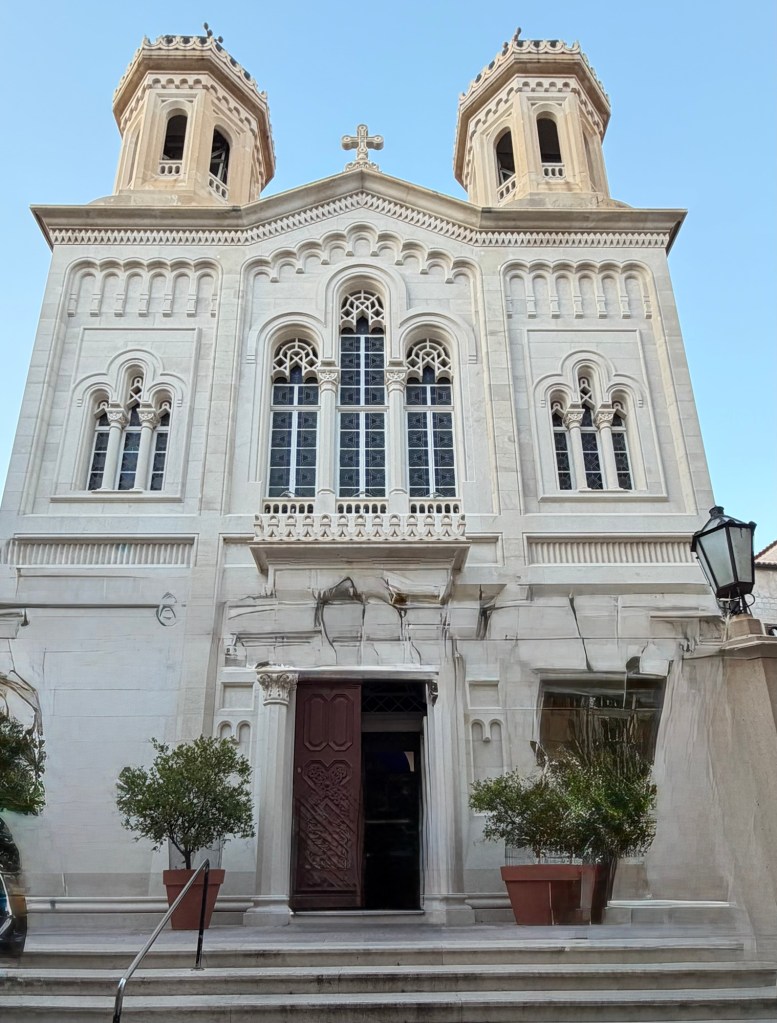
I was surprised to learn that the Serbs and Croats’ cultures are so different. Not only do they have different languages, but those languages have different alphabets: Croatian; Latin and Serbian; Cyrillic. Because Croats were more heavily influenced by Western Europe, they are majority Roman Catholic while the Serbs were influenced by Ottoman Empire and are mostly Eastern Orthodox.
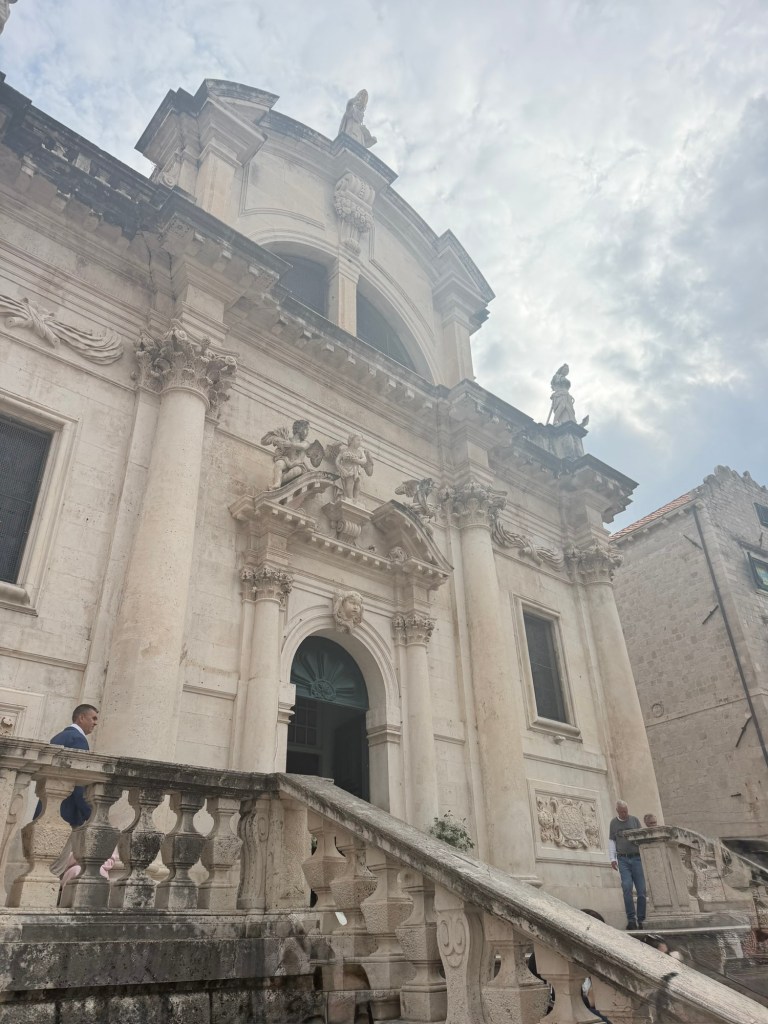
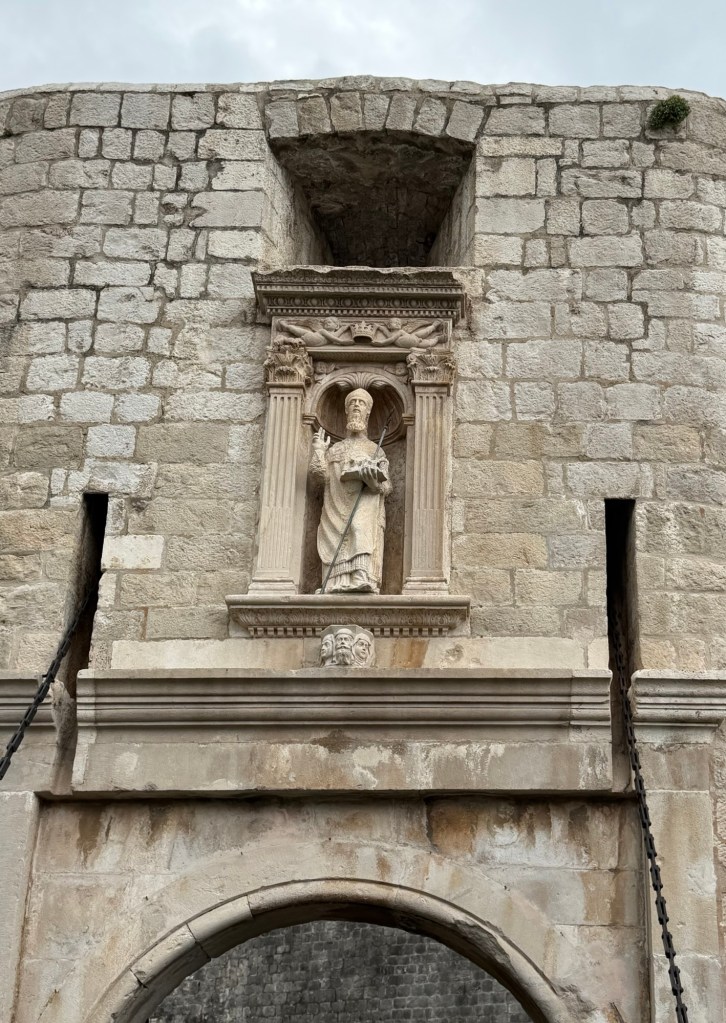
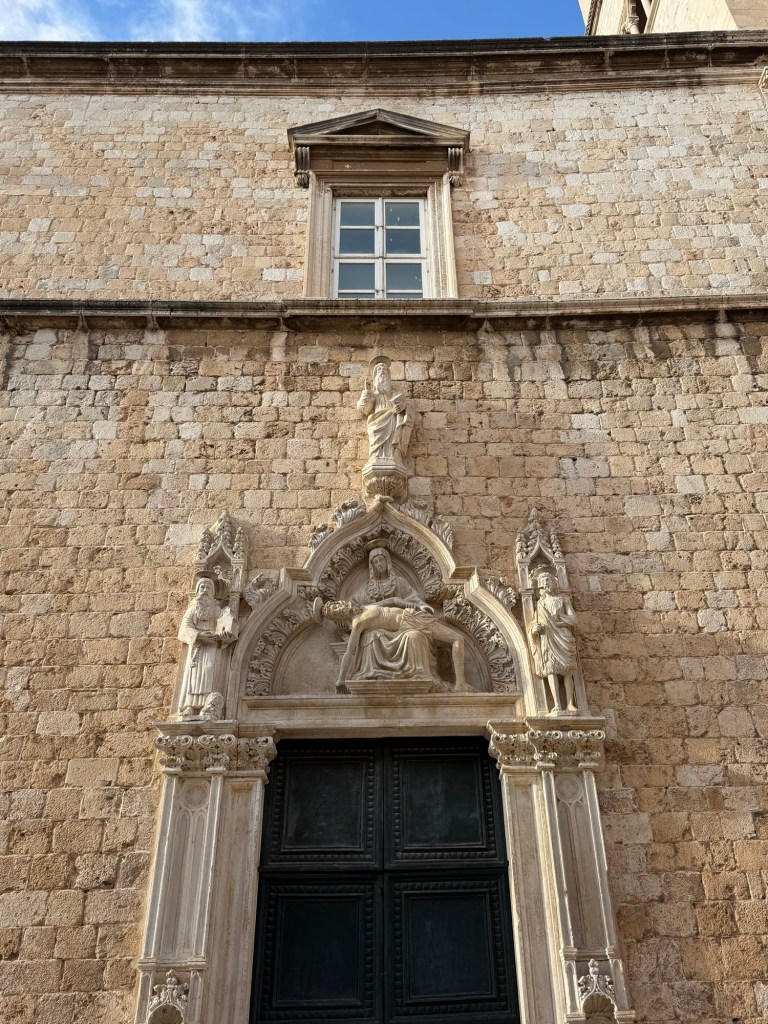
Upon walking over the drawbridge into the Old Town you’re greeted by a statue holding a replica of medieval Dubrovnik. Our guide told us the story of a priest with a vision in 971AD of Saint Blaise warning of an impending invasion by the Venetians. Because of this alert, the city was able to prepare its defenses. Thus, a person who never stepped foot in the city is its patron Saint. You can find his image throughout the city and a church in his honor prominently on the main square.
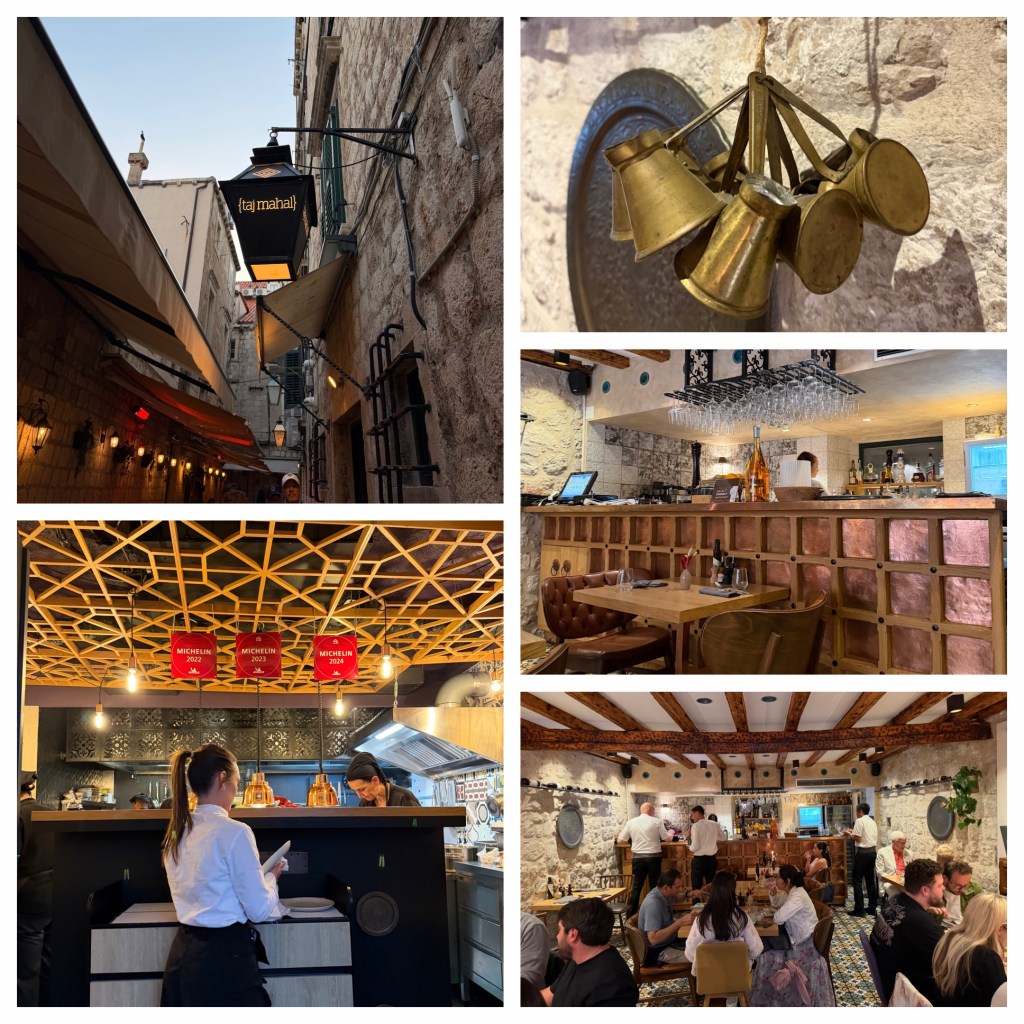
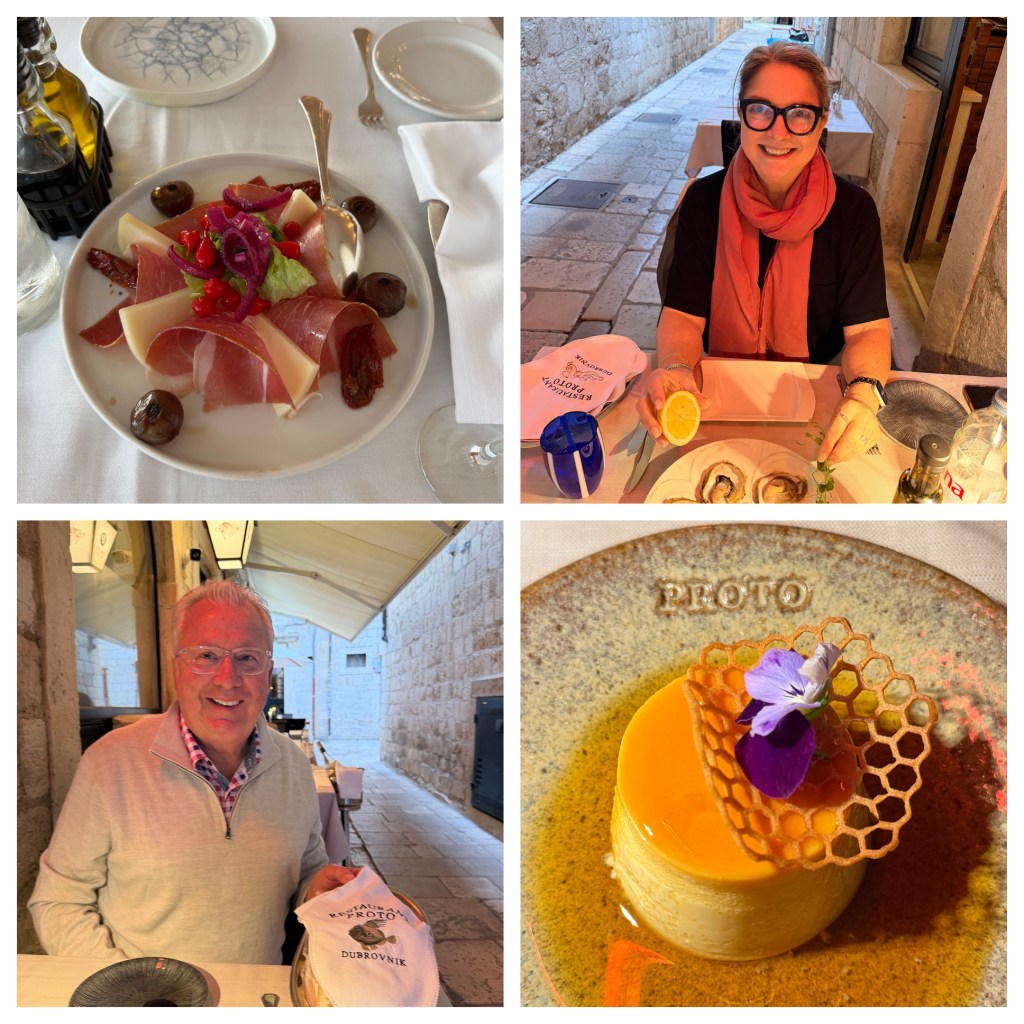
Another discovery was all the amazing restaurants in town. Our favorites included the Taj Majal, which specializes in Bosnian food, Porto, a seafood restaurant, both in Old Town, and Restaurant More at our hotel which serves Mediterranean food.
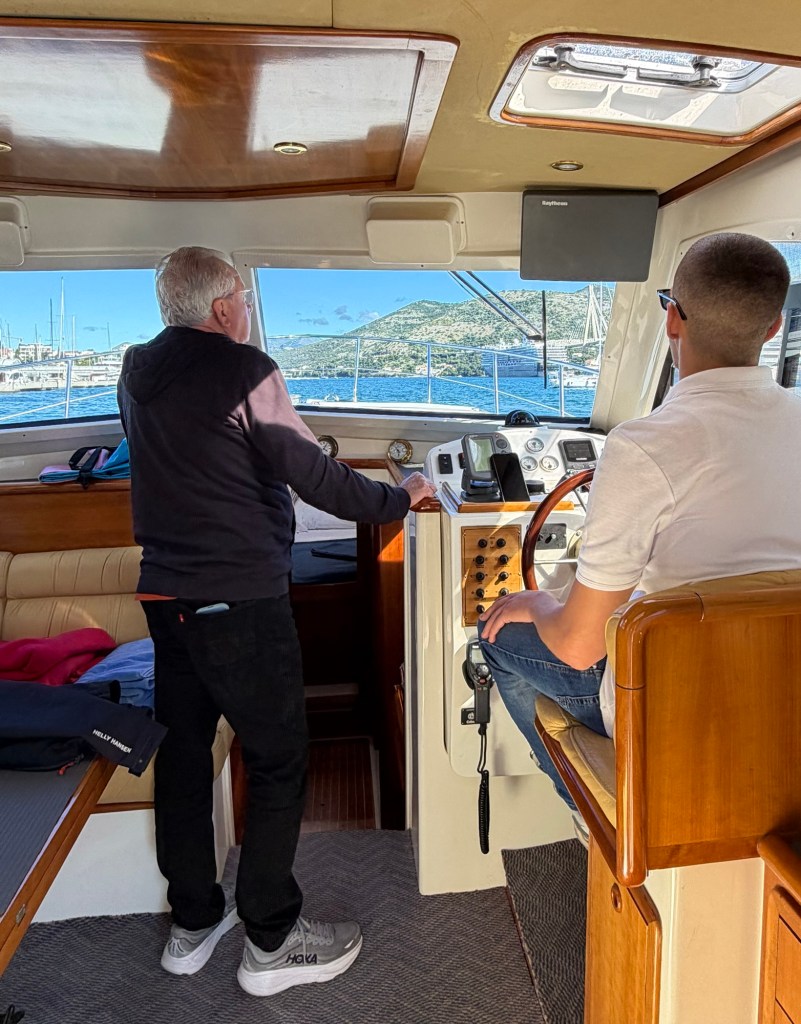
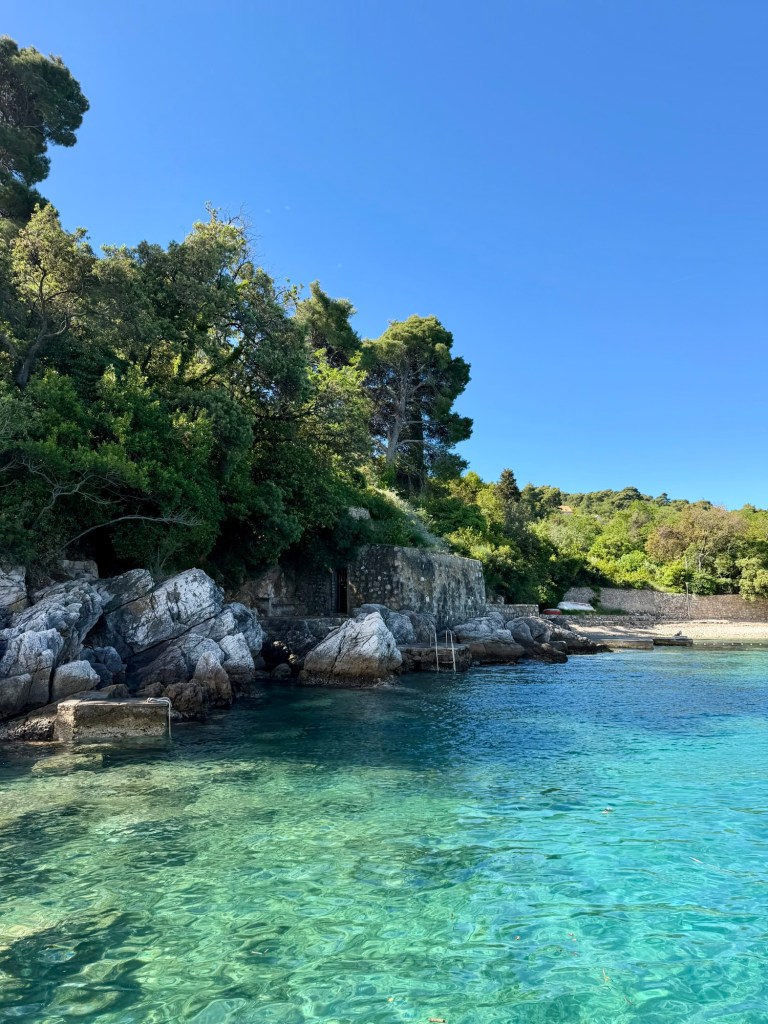
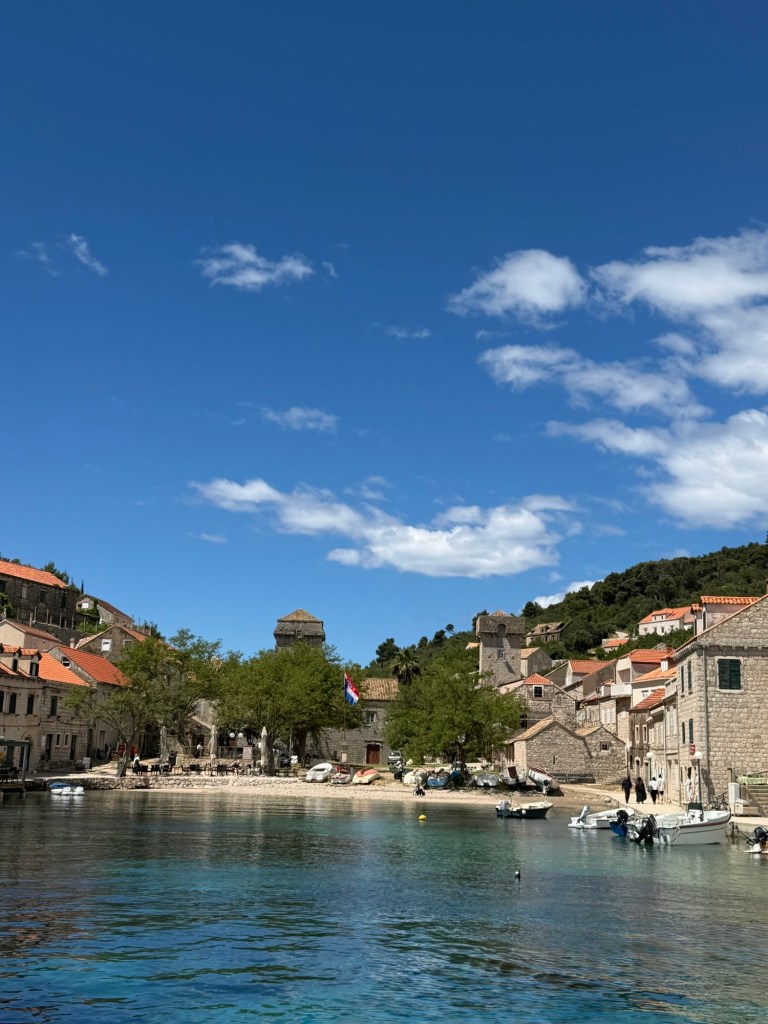
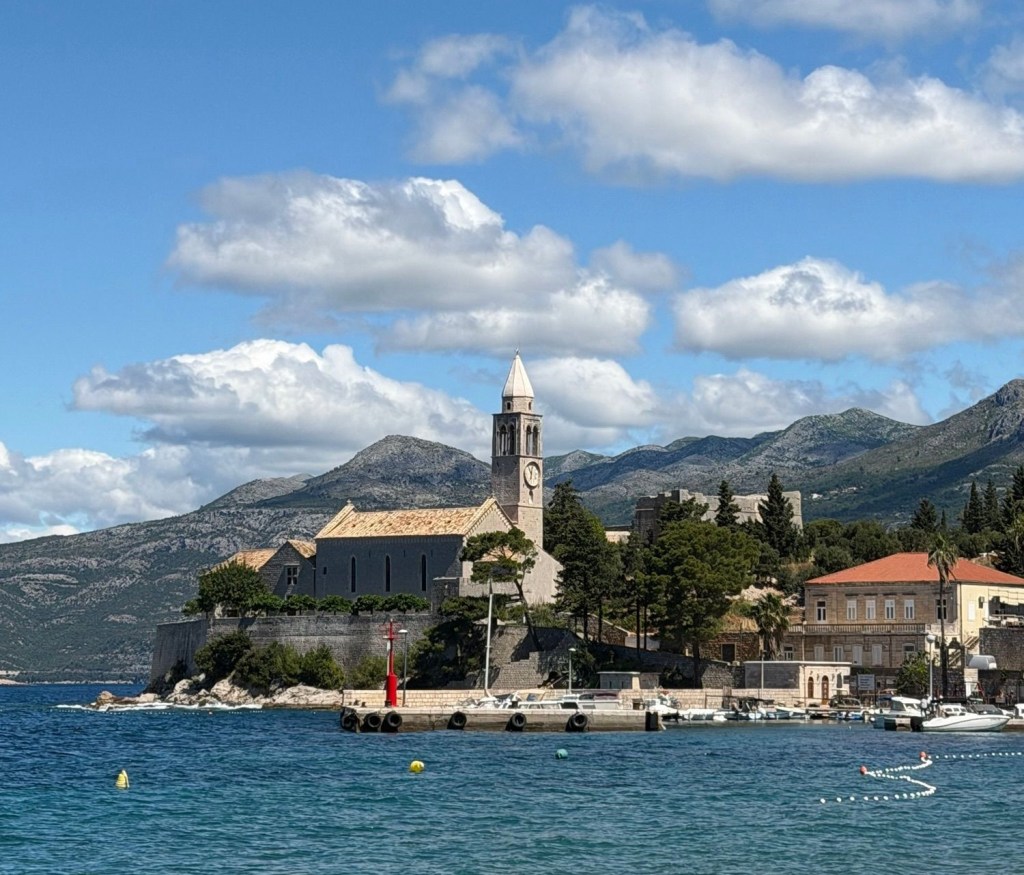
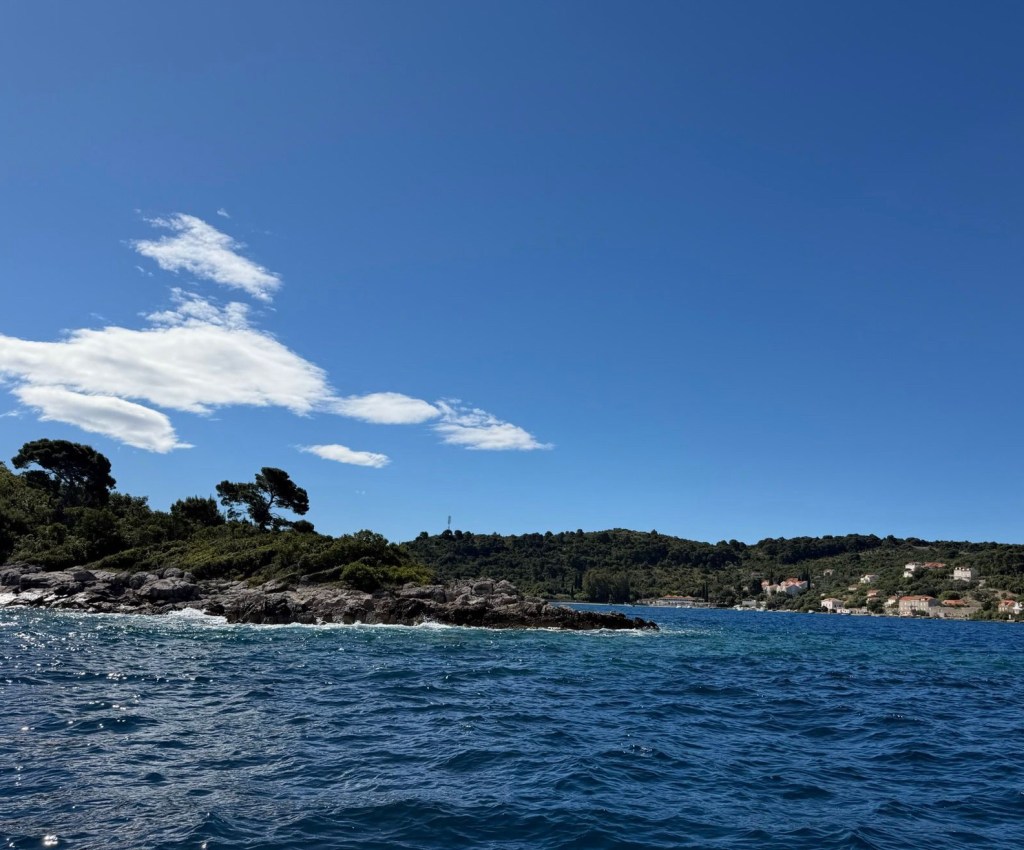
The timing of our trip was fortuitous as we learned that the shoulder months of April, May, and September are the best to travel to Dubrovnik with decent weather and fewer crowds than during the summer. Even though a couple of our days were raining and overcast, our boat excursion was on a gorgeous sunny day.
I hope you’ve enjoyed the retelling of my discoveries during my trip to Dubrovnik. But before you go, there’s one more thing I learned that I must share:
Near the Pile Gate, the main entrance to the walled city were two huge magnolia trees on either side. I was surprised because they looked just like, albeit much larger than, the magnolia tree in my backyard in Houston. So, of course, I had to research it.
I discovered that magnolia trees grow naturally in China, Japan, India, eastern United States, Mexico and some parts of the Caribbean. Come to find out, there are a lot of magnolia trees in Dubrovnik, too.
The magnolia is one of the oldest trees on earth dating back almost 100 million years – long before bees evolved. Thus, the magnolia tree was pollinated by beetles which is the reason for its large thick leaves and flowers. Who would’ve thought that one of my discoveries in Dubrovnik would be about something literally in my own backyard.