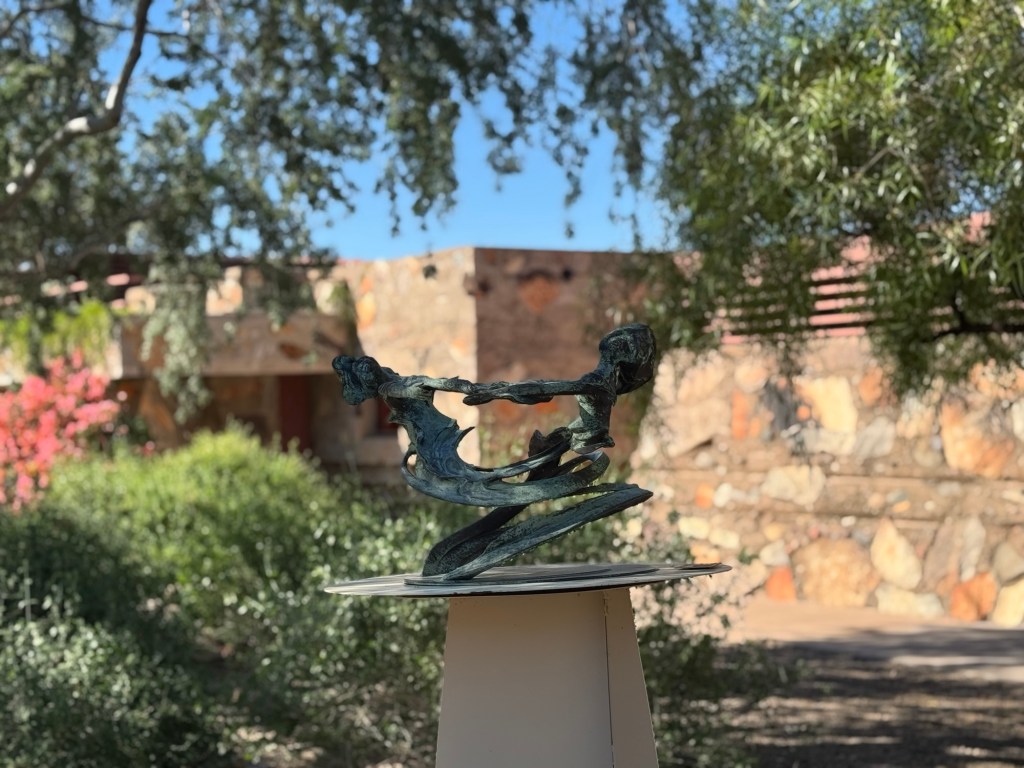
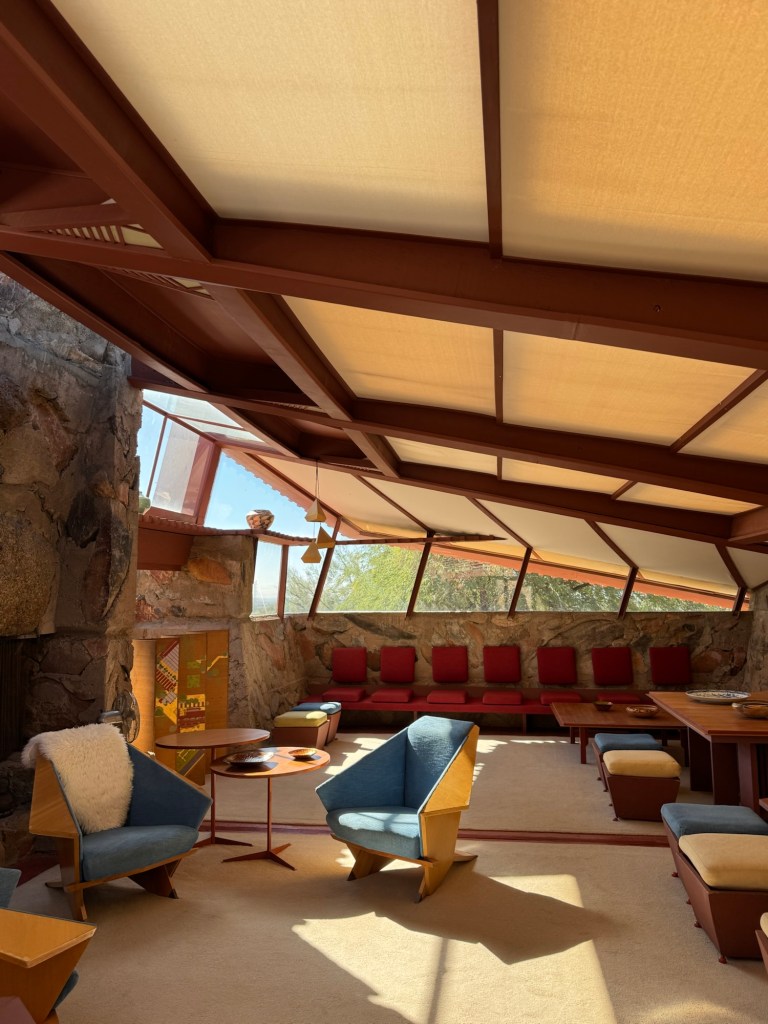
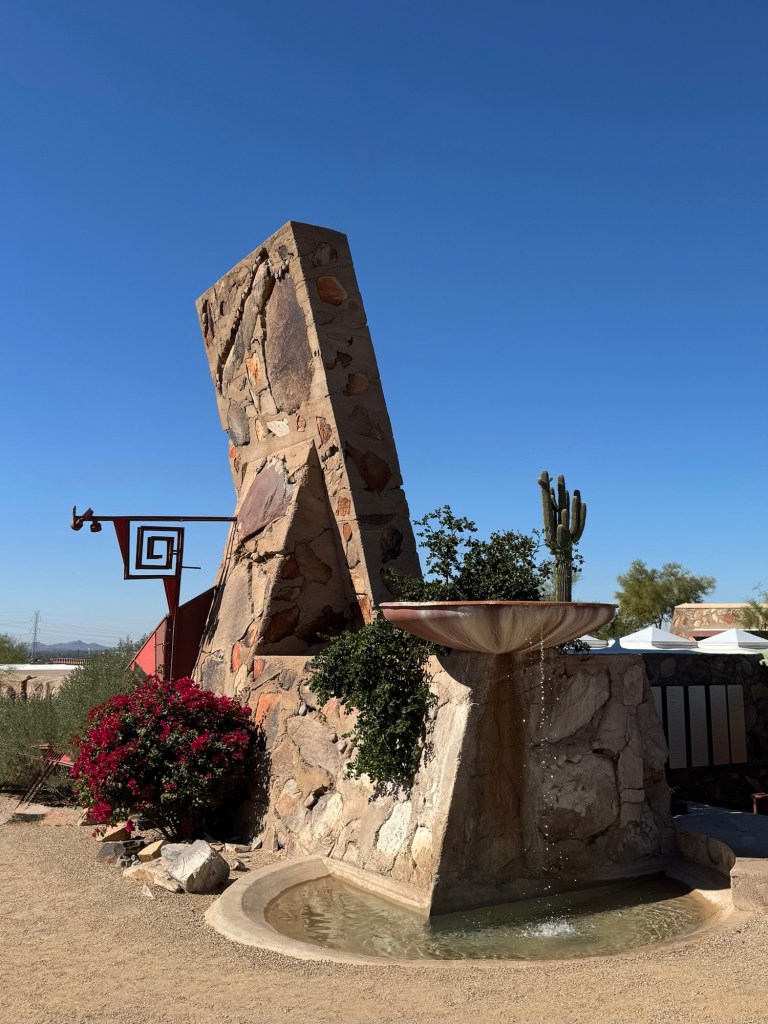
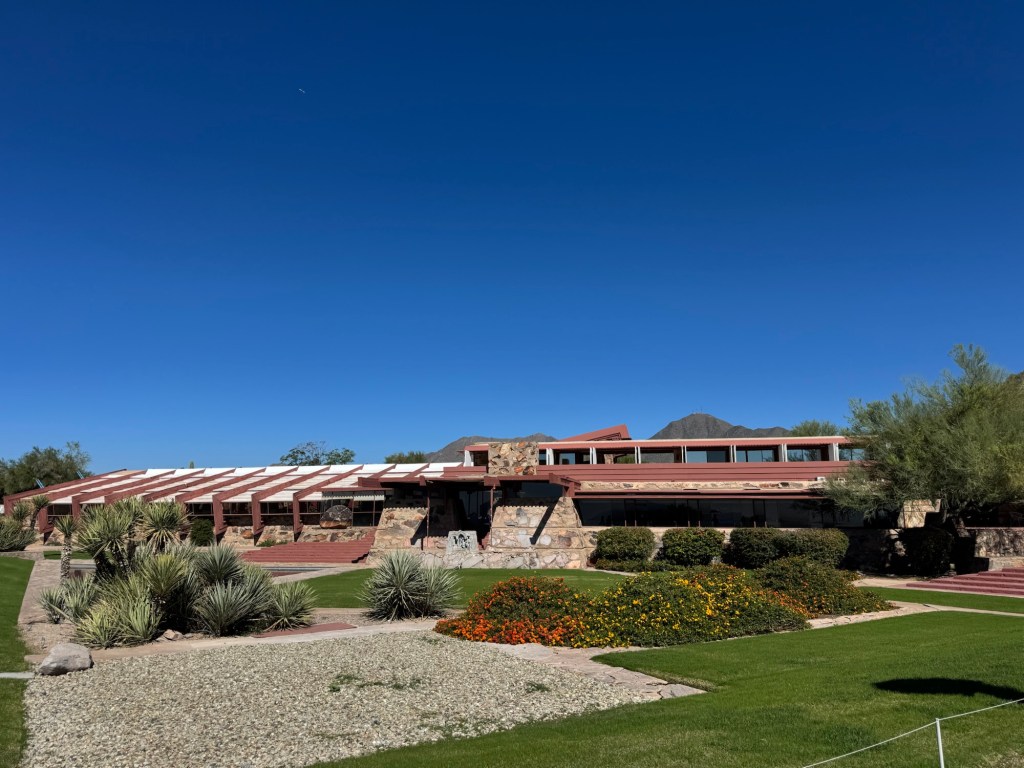
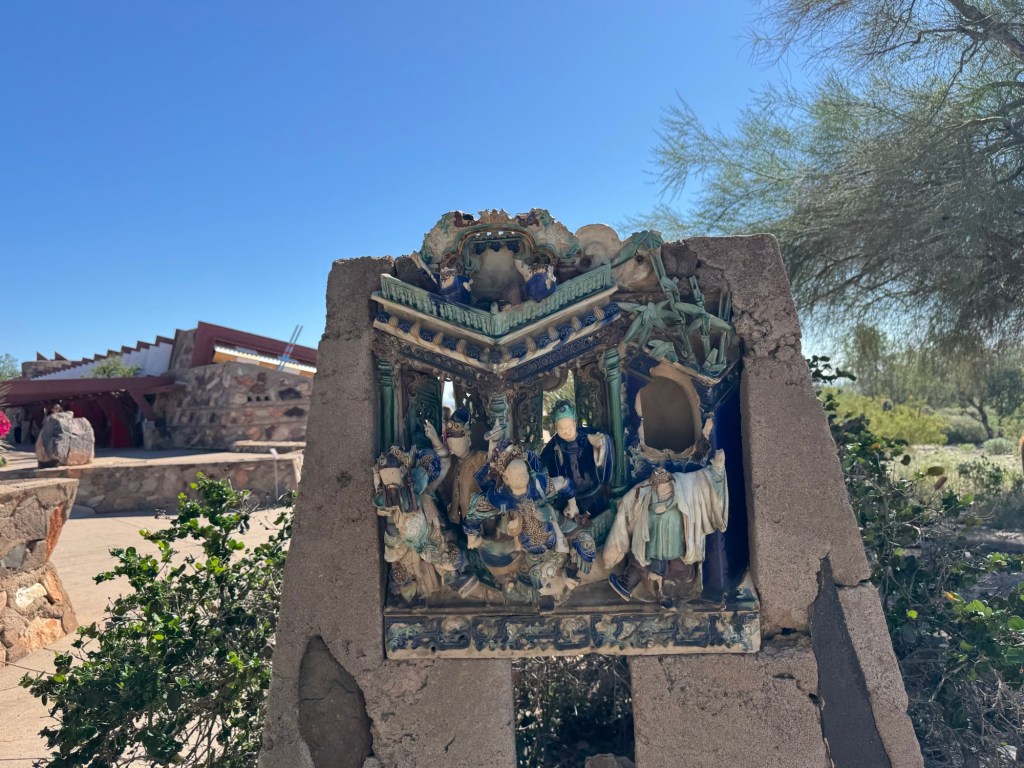
The next morning we started our day with a behind-the-scenes-tour of Taliesin West, the southwestern home of Frank Lloyd Wright’s apprenticeship program. He and his third and final wife, Olgivanna, had a house on the campus as well.
Wright grew up in Wisconsin, attended college for less than two years and as a 20-year-old moved to Chicago which was booming after the Great Fire. He first worked for Joseph Lyman Silsbee, then landed a career-defining job with Adler & Sullivan, where Louis Sullivan became his mentor and shaped his early thinking about form, function, and design.
Two years later Wright set up his own home and studio in Oak Park, just outside the city. There he spent the next two decades experimenting with long, low rooflines, open interiors, and flowing spaces — the beginnings of what would become the Prairie School style.
Beginning in 1932, Wright, age 65, and his 32-year-old wife, Olgivanna, founded an apprenticeship program at his home and studio in Wisconsin where young architects and artists lived, worked, and studied on the property, helping build structures, farm the land, cook, and participate in music, dance, and cultural activities.
Five years later they would create a similar apprenticeship program in Phoenix named Taliesin West. Frank and Olgivanna would live and work there during the winters.
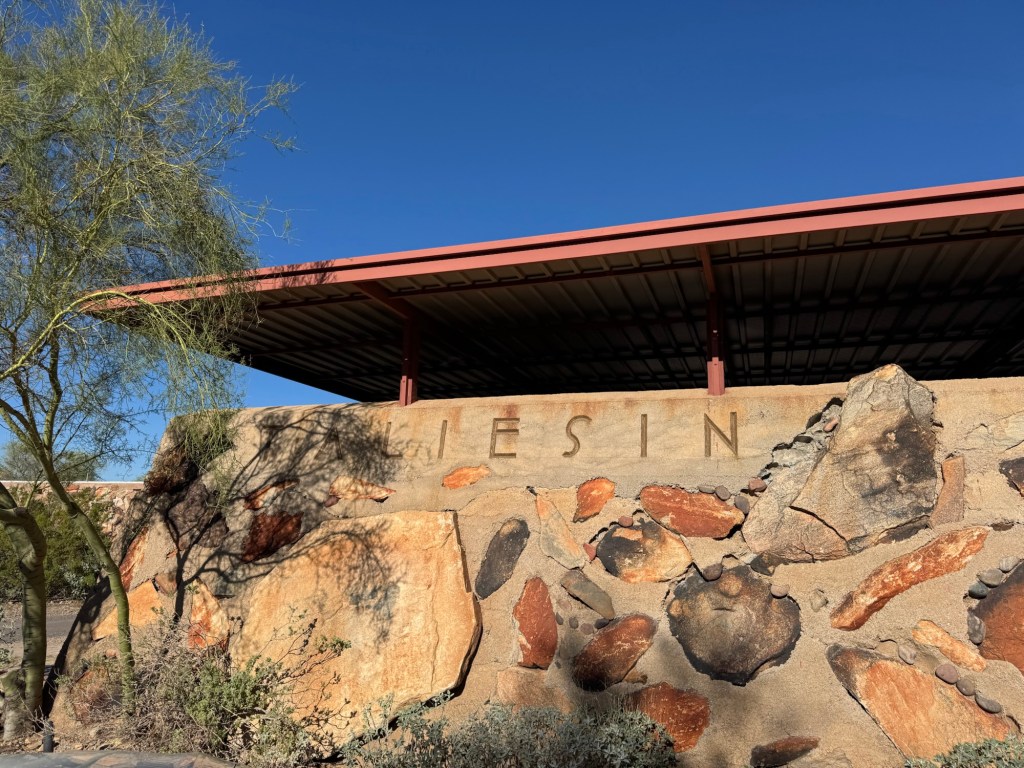
In Welsh, Taliesin roughly means “shining brow.” He chose the name to honor his Welsh heritage and to reflect his belief that the building should sit like a “shining brow” on the hillside—not dominating the landscape, but becoming part of it.


Speaking of transitions…. after a delightful lunch at Lon’s, we arrived at our next stop on the other side of town, the Wrigley Mansion which was built by William Wrigley, Jr., and saved by another Chicago family, the Hormels.
Mr Wrigley (1861–1932) has an interesting story. He was born in Philadelphia to a soap manufacturer. He took $34 and several boxes of soap with him to Chicago to begin a new career. He eventually realized that his chewing gum giveaway was more popular than the products he was selling. He shifted fully into gum in the 1890s, launching iconic brands like Juicy Fruit and Wrigley’s Spearmint.
A master marketer, Wrigley used bold national advertising and even gave stock to his employees. He later invested heavily in real estate and civic projects, most famously purchasing and developing Santa Catalina Island in California. He also became the majority owner of the Chicago Cubs. Wrigley remained active in his businesses until his death in 1932, leaving a legacy as one of America’s great brand builders, as well as several homes.


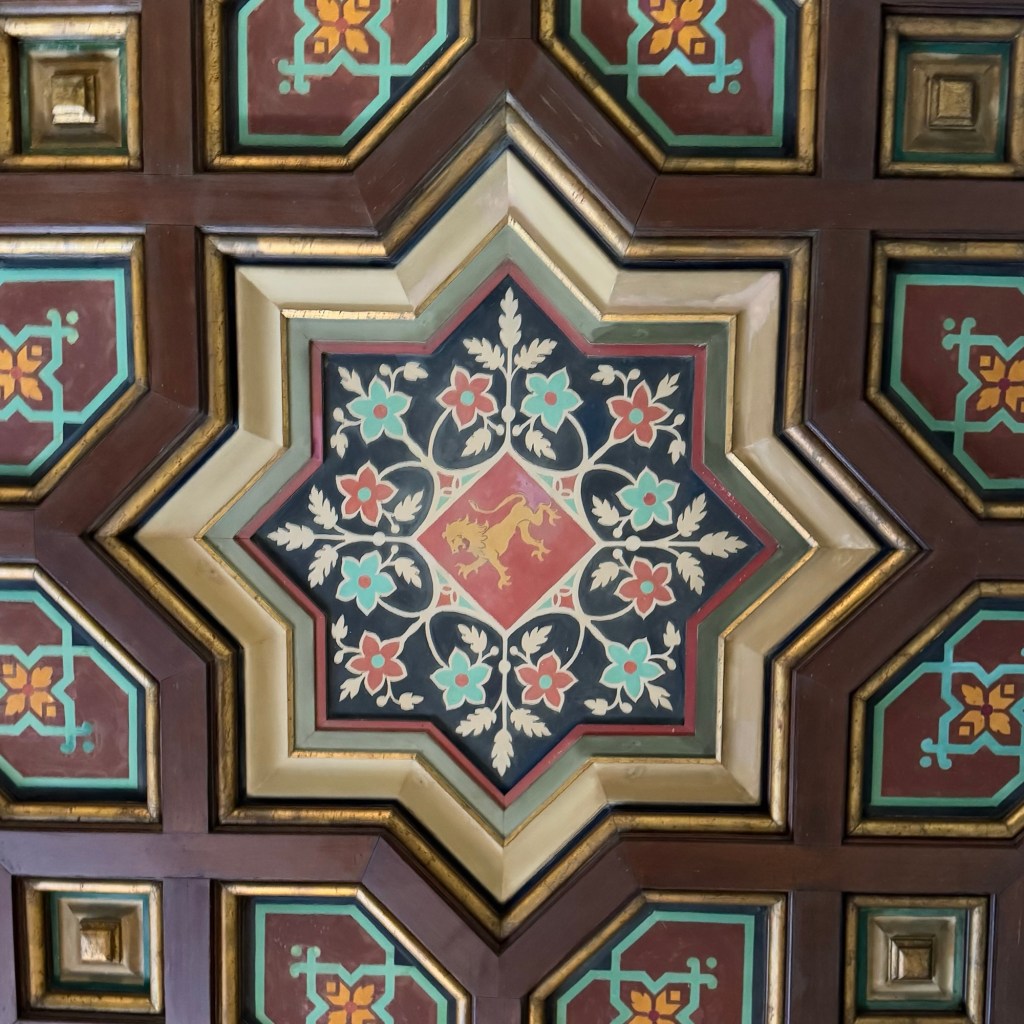

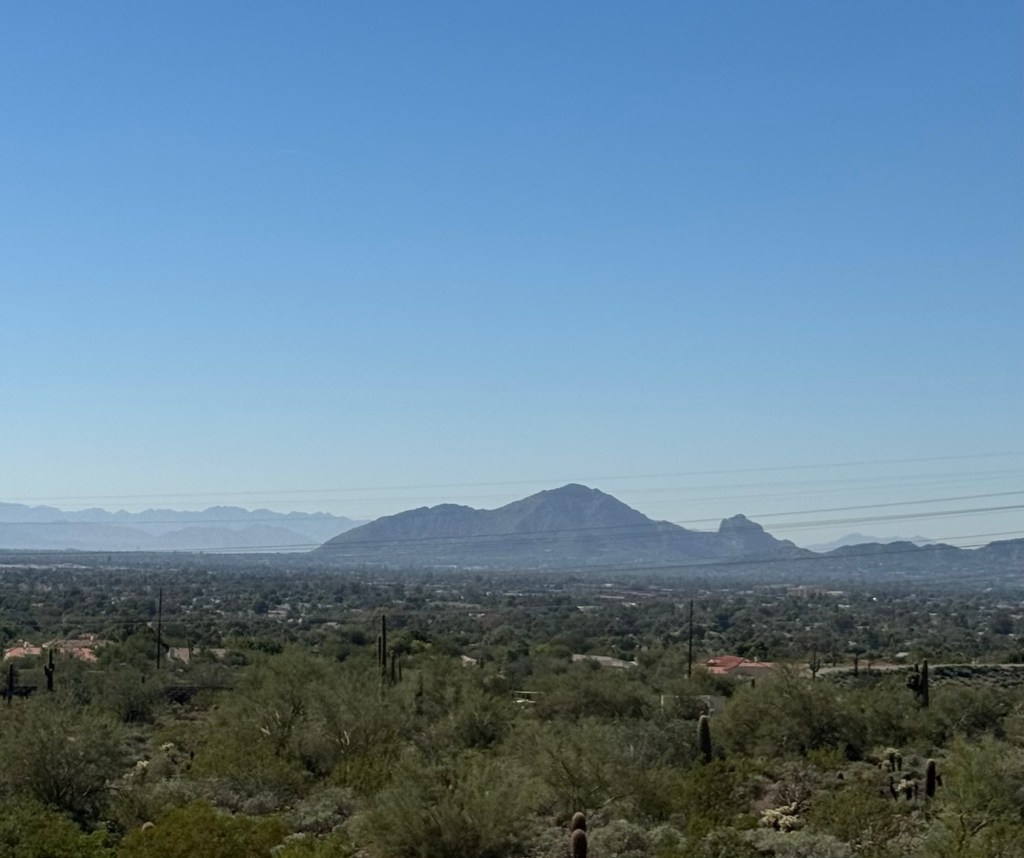
In one day, we explored two very different Phoenix icons: the desert-inspired quiet brilliance of Taliesin West and the glamorous, hilltop elegance of the Wrigley Mansion. Together, they offered a vivid look at the artistry and history that shape the city.
 New City New State