The only thing my friend Julia and I planned prior to my visit to Phoenix was a behind-the-scenes tour of Frank Lloyd Wright’s Taliesin West. I’ve visited her periodically since she moved to Phoenix in 1991 but have not done many touristy things. We usually go hiking and frequent the botanical garden. This visit would be different. We planned a couple of other excursions over coffee our first morning. I suggested the Japanese Friendship Garden because it had popped up on a few different websites. She wasn’t too optimistic about that activity. It had been a while since she had visited, had meh feelings about it and wasn’t too eager to go back. But, thank goodness, she was willing to give it another try.
We arrived at the garden a little after 11am and noticed a guided tour in progress. Julia was clever enough to ask if we could join that group. Soon after, we were listening to detailed information about the purposefully constructed garden.
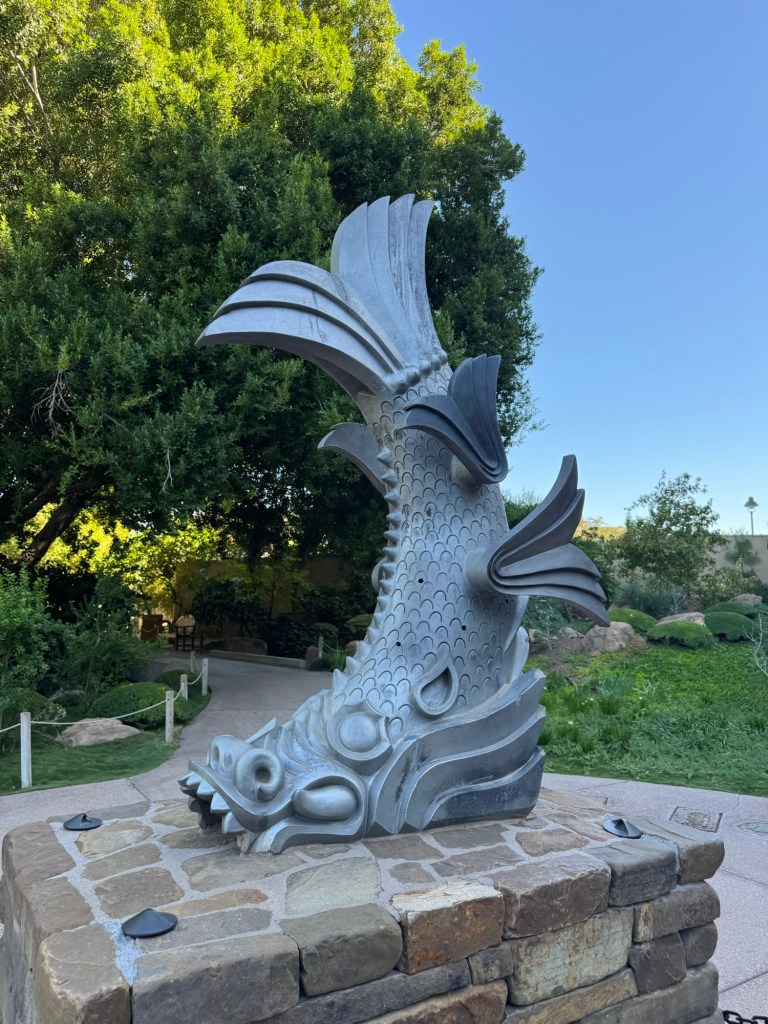
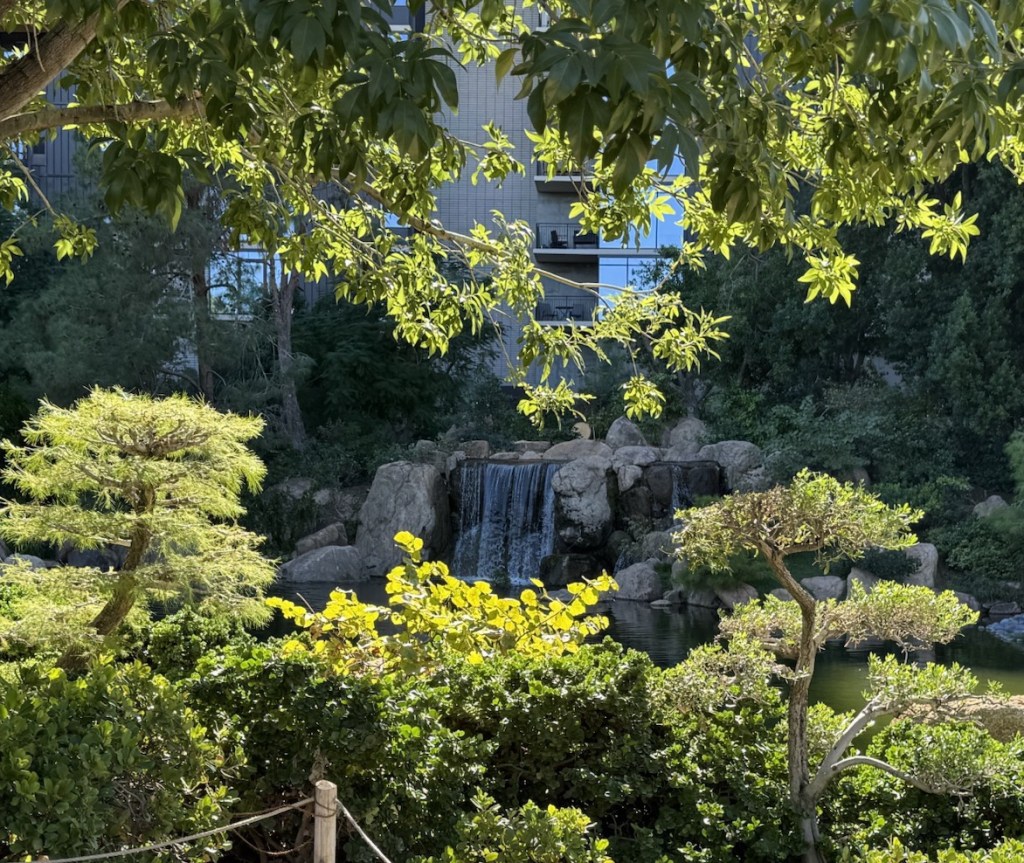
“…the entirety of the garden is never visible at once. Instead, the viewer is led to uncover intentionally hidden sights and sounds of the landscape while strolling along its curved paths.”

Lilies symbolize purity and grace in Japanese gardens. There were at least three different varieties in bloom during our visit.
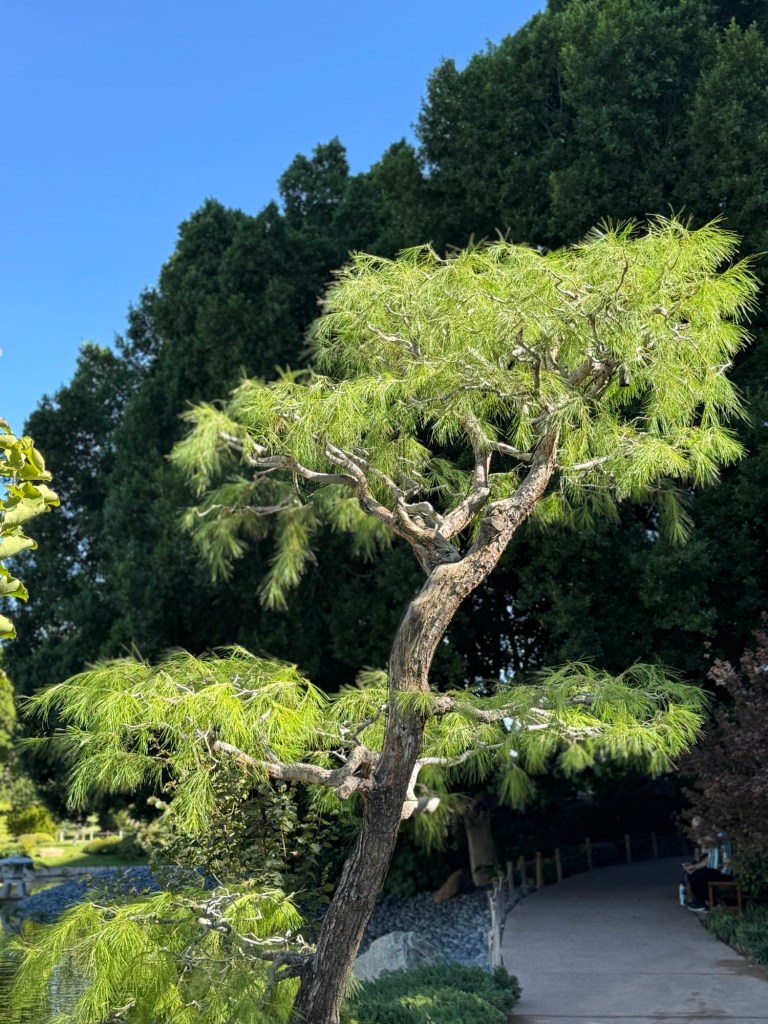

This pagoda brings a mountain-temple aesthetic into the garden’s mountain zone which is 14 feet above the others and on the backside of the waterfall. The other three zones of the garden are grasslands, woodlands, and beaches.


Now that you know the details of the Phoenix Friendship Garden, here is some of its background. Phoenix and Himeji, Japan became sister cities in 1976. Almost a decade later, the a Japanese style garden in Phoenix was proposed by Himeji Mayor Matsuji Totani. After another decade of planning and construction by landscape architects and craftsmen from Himeji, the first phase of the garden was complete. The garden, named Rohoen, was fully opened in 2002.
The name “Ro Ho En” itself is meaningful: Ro (鷺) = heron, a symbol of Himeji City and its Castle – the UNESCO World Heritage site I mentioned earlier, Ho (鳳) = phoenix (the mythical bird) representing Phoenix, and En (園) = garden in Japanese. I’m hopeful you’re able to see Rohoen and hear about all of its symbolic beauty one day.
Since we weren’t far from the Heard Museum and that was one of the options we had discussed earlier, we decided to hop on over. Before this trip, I had never heard of the Heard (see what I did there?) but soon learned that it was one of the leading museums devoted to Native American art, history, and culture. It was founded in 1929 by a Chicago-born businessman, Dwight Heard and his wife, Maie, who moved to Phoenix in the late 1800s because of Dwight’s health – tuberculosis to be exact. He had a deep interest in archaeology and indigenous cultures of the Southwest. Their collecting began when they supported archaeological excavations with money Dwight made in Phoenix real estate.

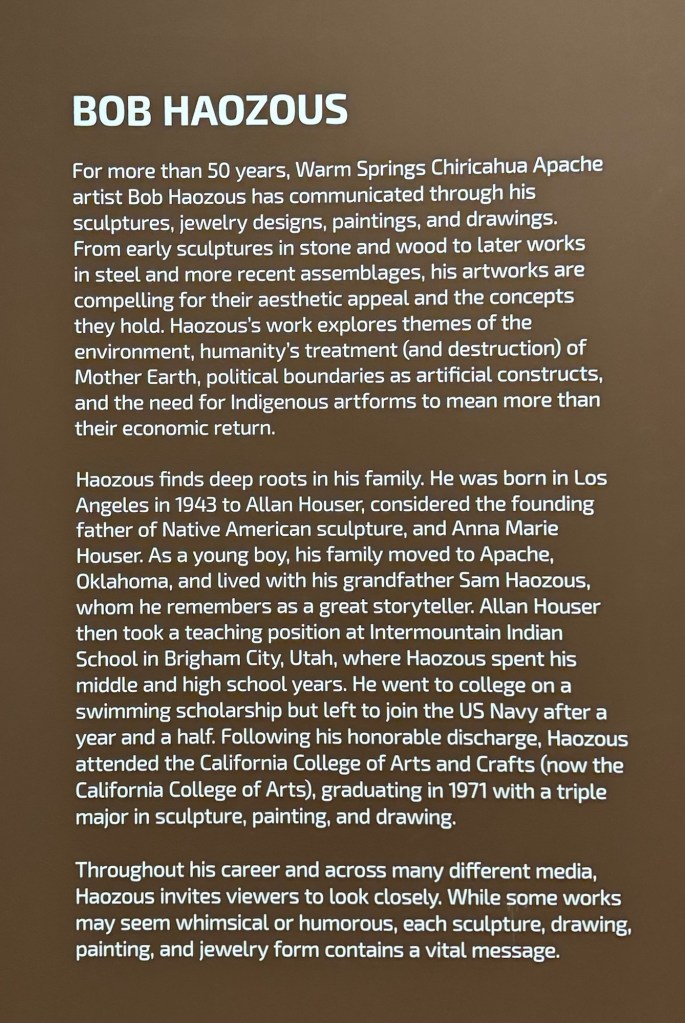


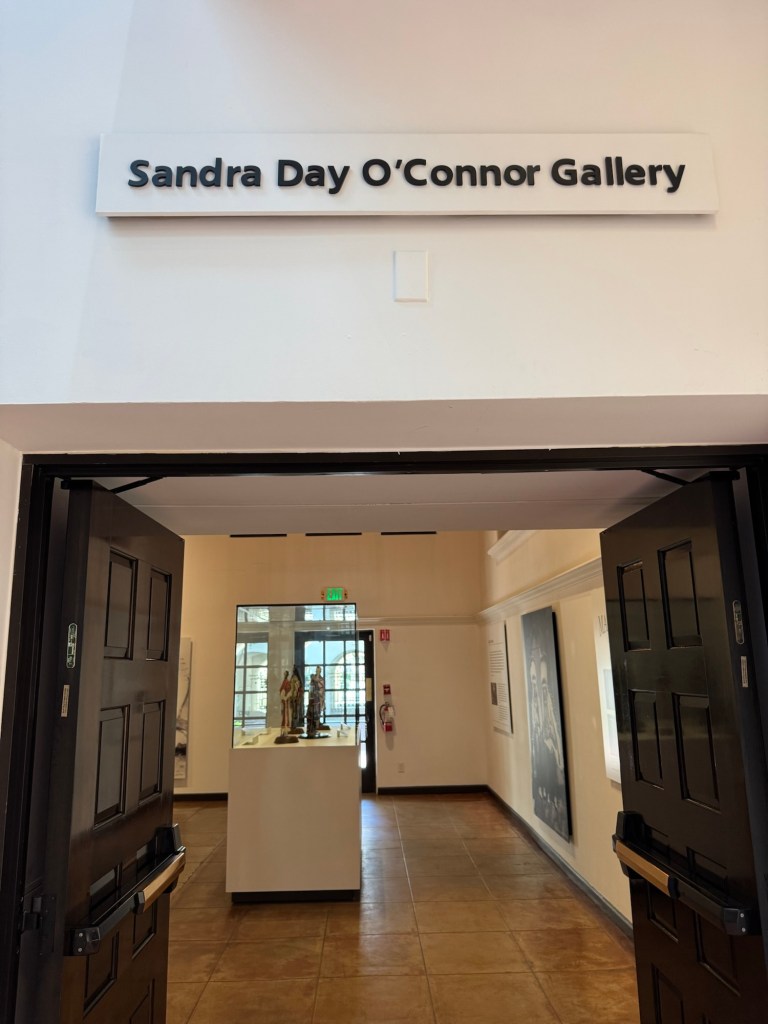
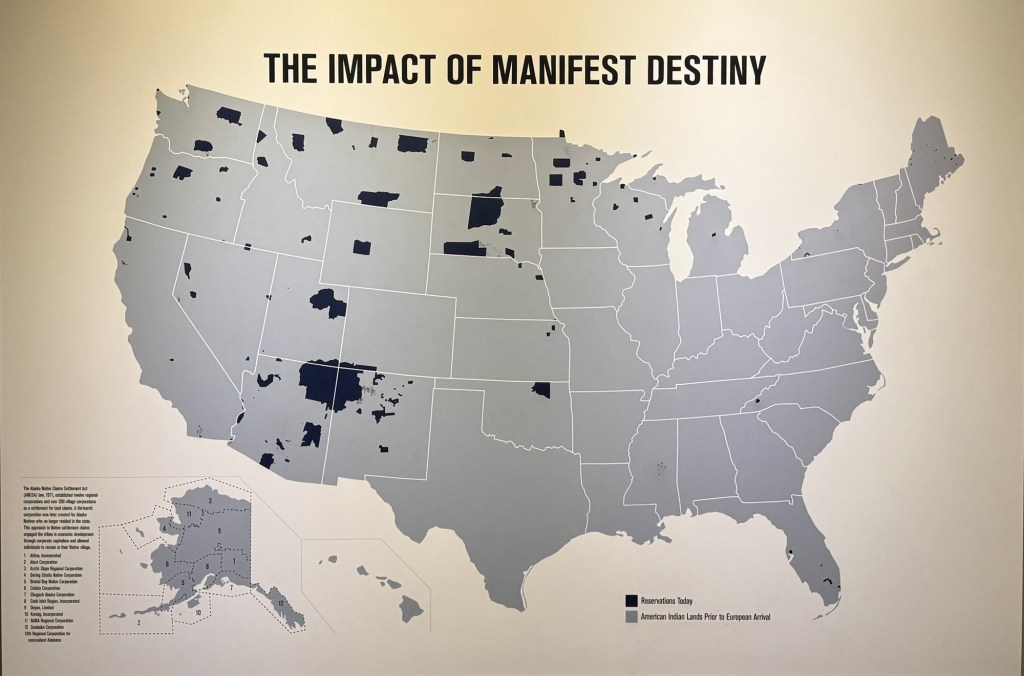
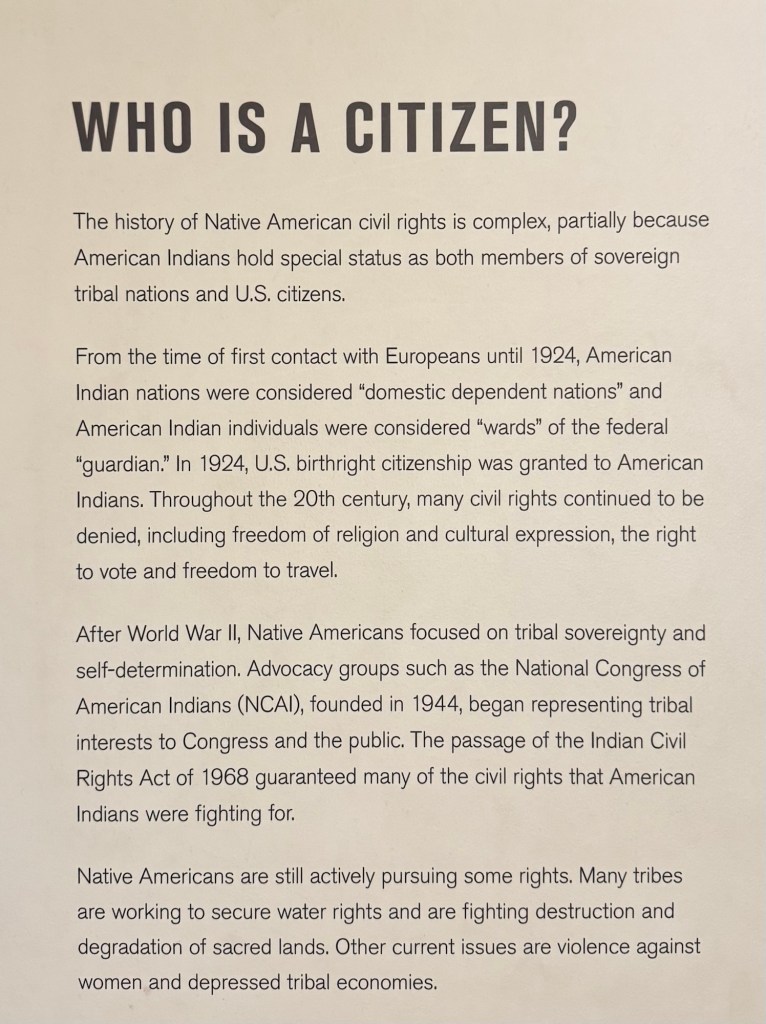
states they weren’t allowed to vote until 1957?!!
I didn’t learn that in school.

Chiricahua Apache artist Bob Haozous.
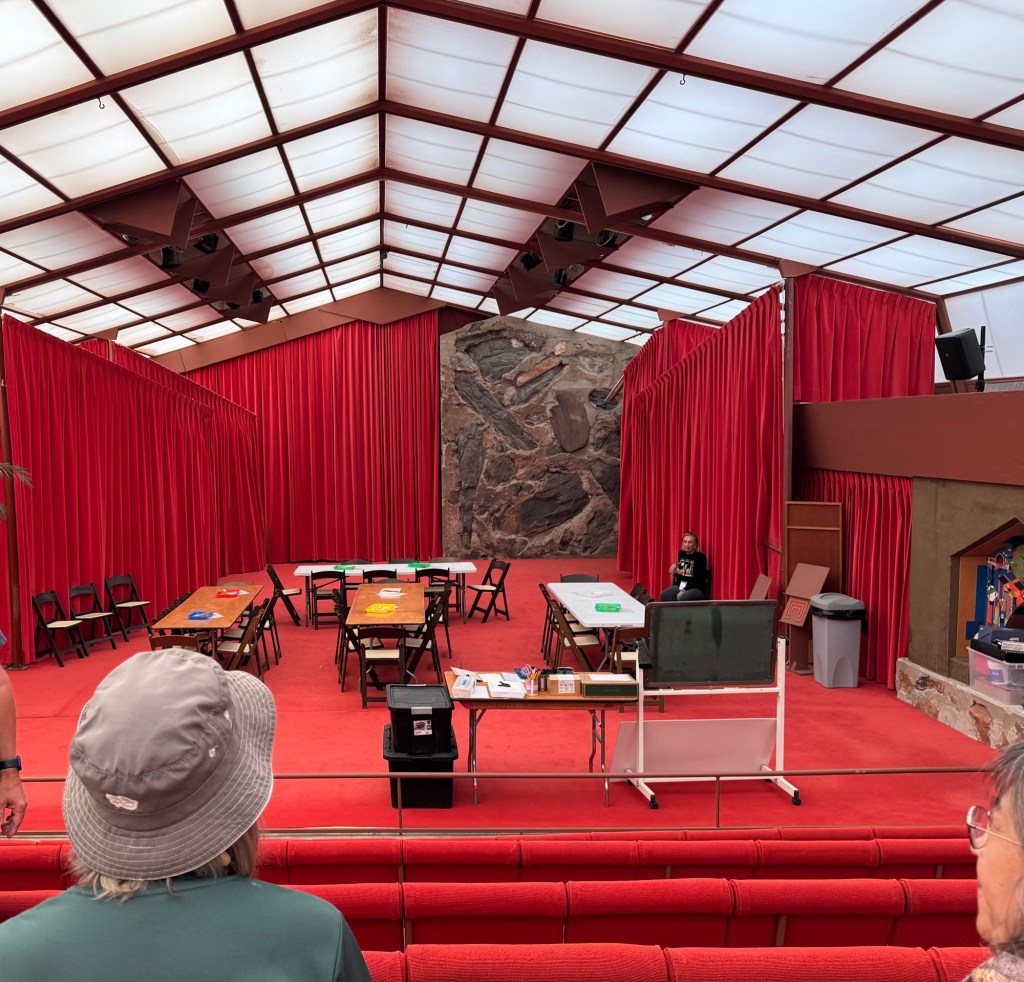
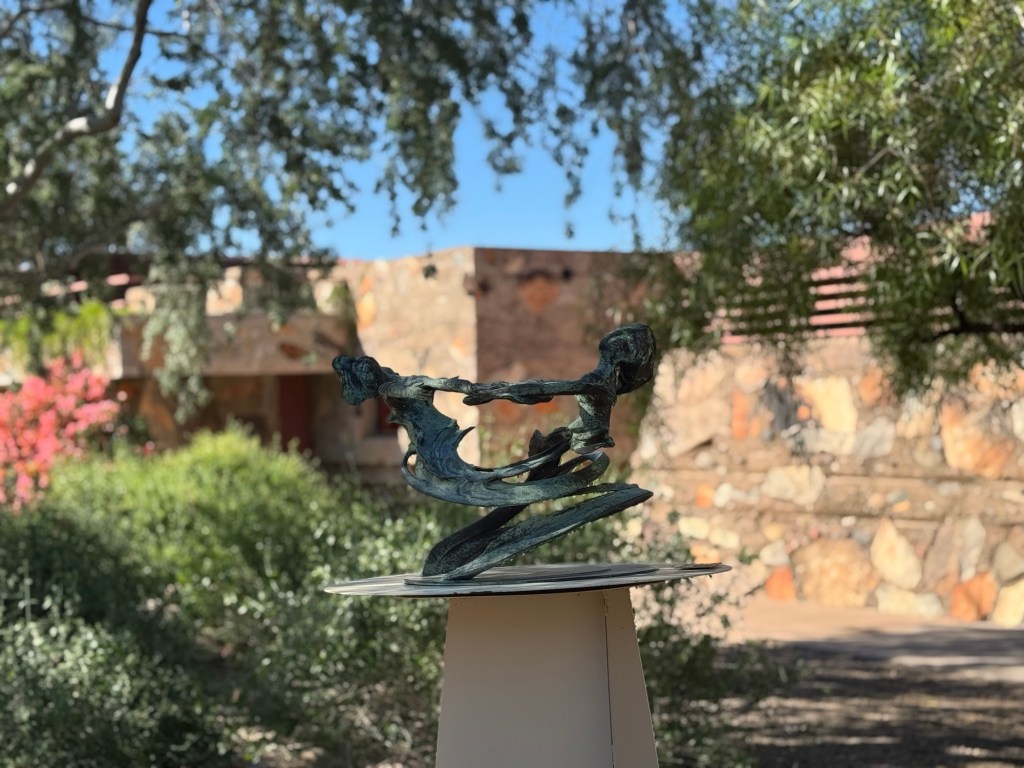
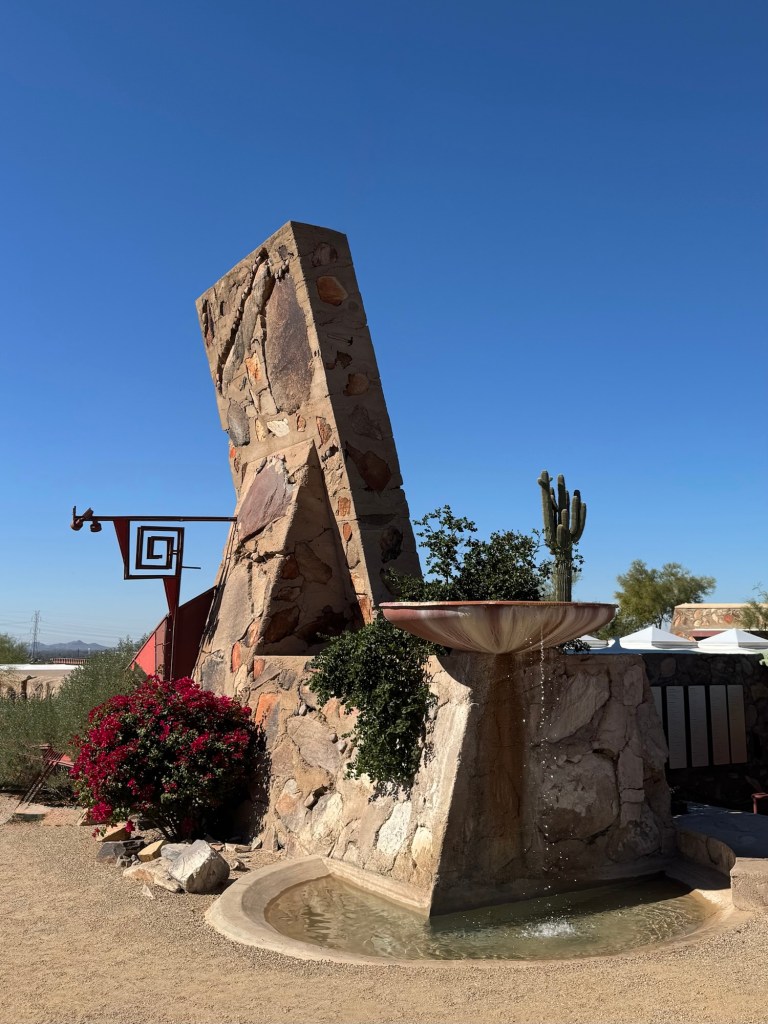
The next morning we started our day with a behind-the-scenes-tour of Taliesin West, the southwestern home of Frank Lloyd Wright’s apprenticeship program. He and his third and final wife, Olgivanna, had a house on the campus as well.
Wright grew up in Wisconsin, attended college for less than two years and as a 20-year-old moved to Chicago which was booming after the Great Fire. He first worked for Joseph Lyman Silsbee, then landed a career-defining job with Adler & Sullivan, where Louis Sullivan became his mentor and shaped his early thinking about form, function, and design.
Two years later Wright set up his own home and studio in Oak Park, just outside the city. There he spent the next two decades experimenting with long, low rooflines, open interiors, and flowing spaces — the beginnings of what would become the Prairie School style.
Beginning in 1932, Wright, age 65, and his 32-year-old wife, Olgivanna, founded an apprenticeship program at his home and studio in Wisconsin where young architects and artists lived, worked, and studied on the property, helping build structures, farm the land, cook, and participate in music, dance, and cultural activities.
Five years later they would start living and working at Taliesin West during the winters.
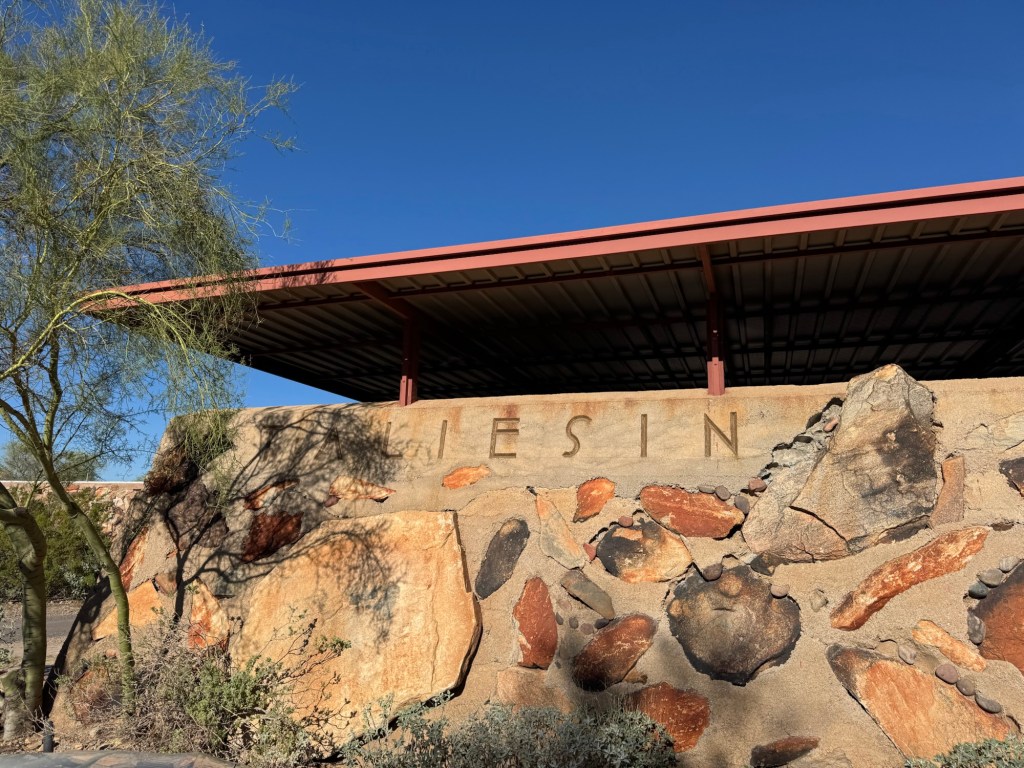
In Welsh, Taliesin roughly means “shining brow.” He chose the name to honor his Welsh heritage and to reflect his belief that the building should sit like a “shining brow” on the hillside—not dominating the landscape, but becoming part of it.






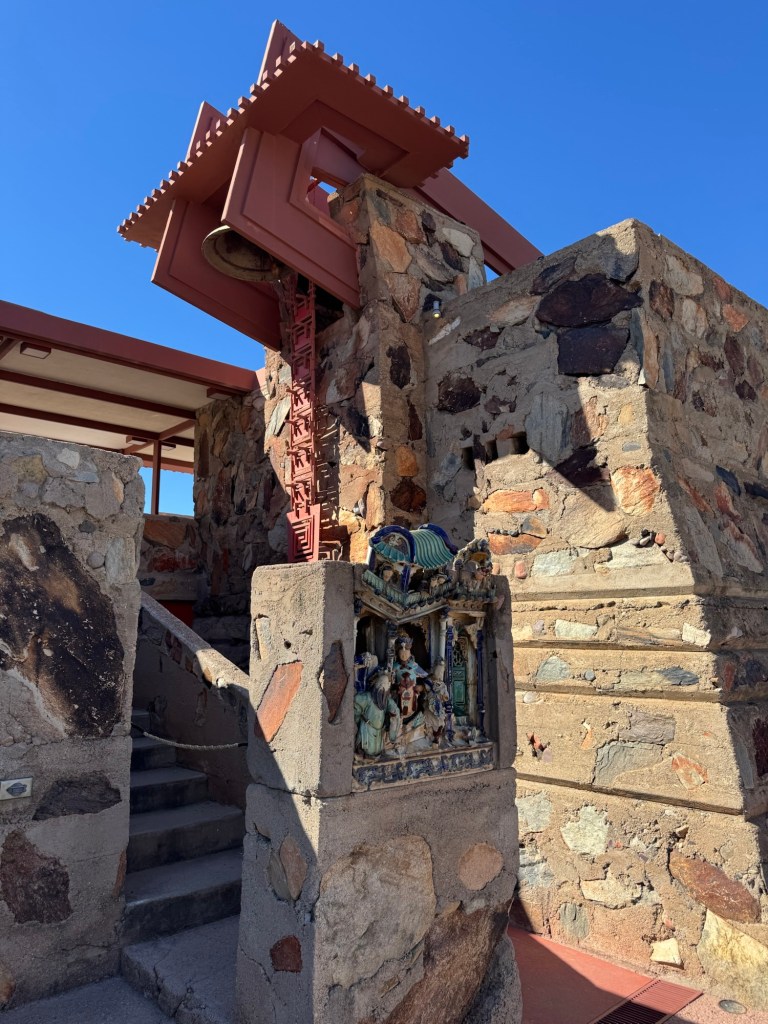
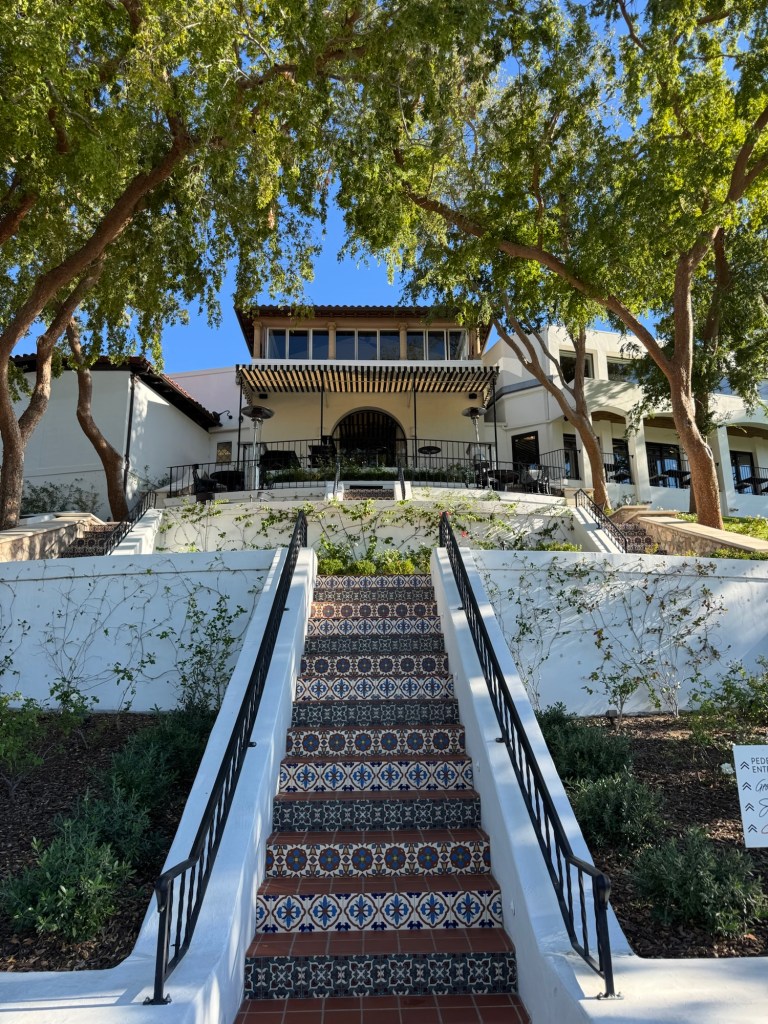
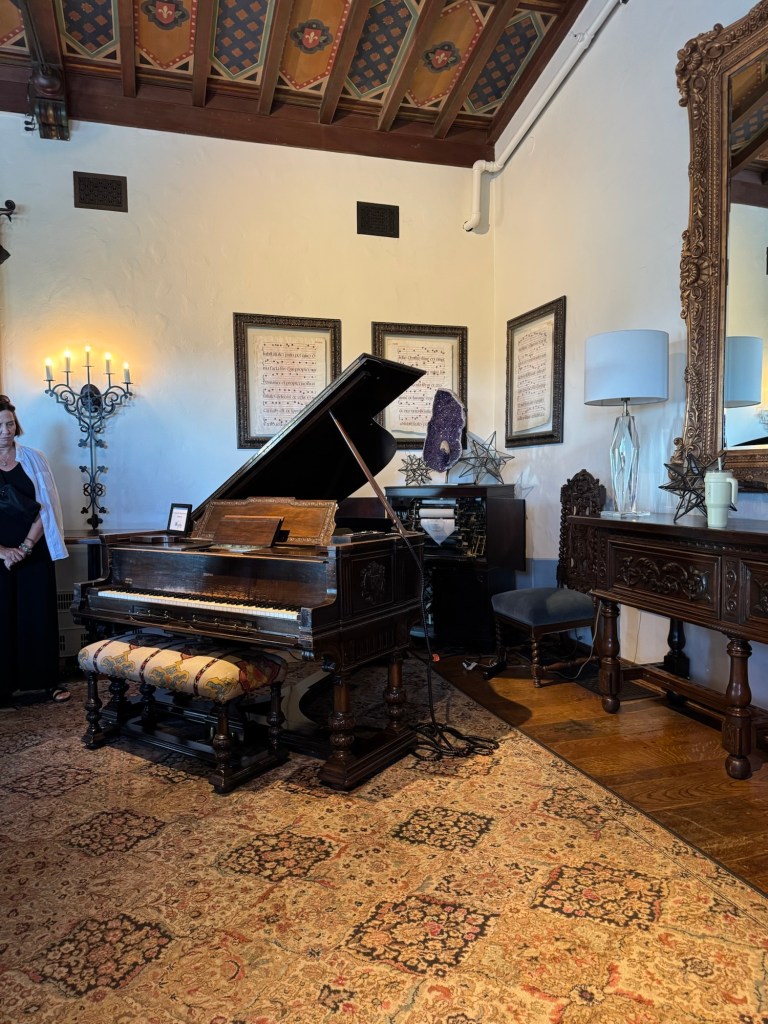
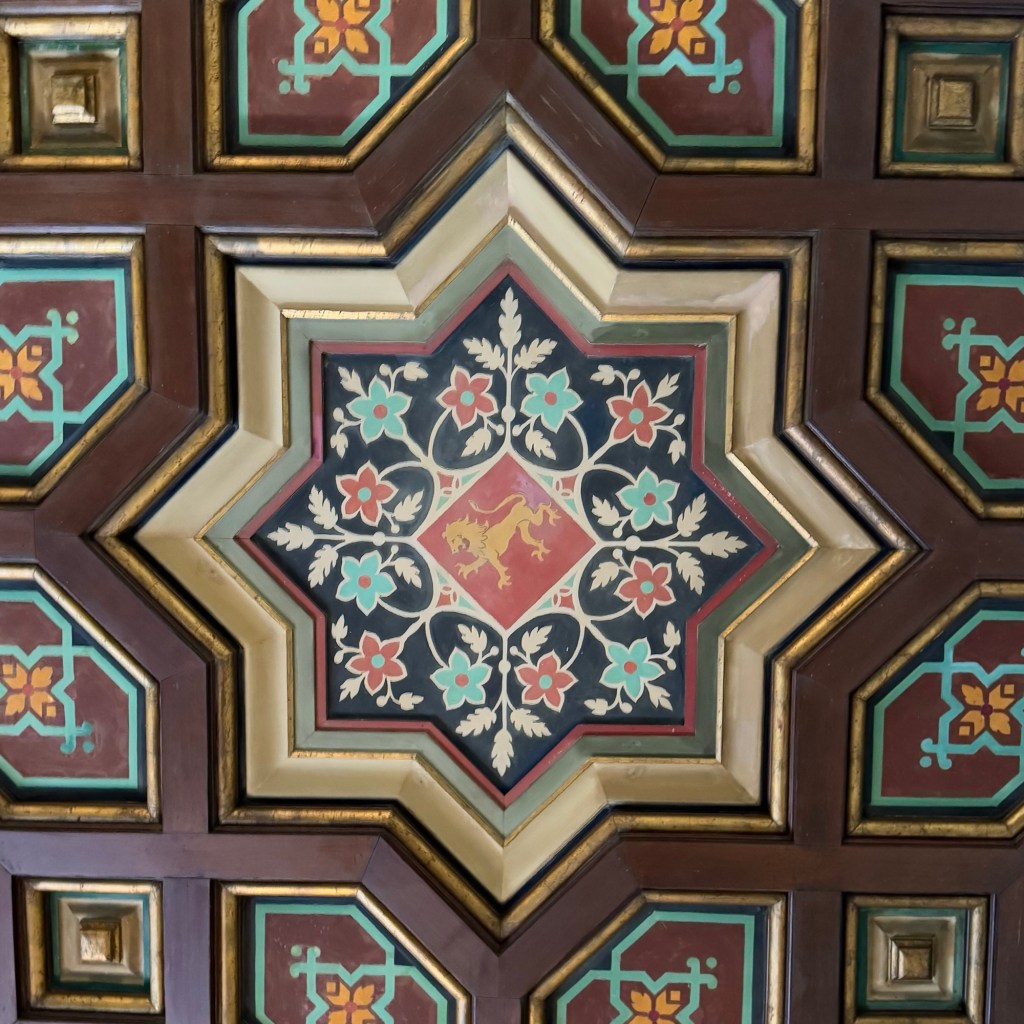
Speaking of transitions…. after a delightful lunch at Lon’s, we arrived at our next stop on the other side of town, the Wrigley Mansion which was built by William Wrigley, Jr., and saved by another Chicago family, the Hormels.
Mr Wrigley (1861–1932) has an interesting story. He was born in Philadelphia to a soap manufacturer. He took $34 and several boxes of soap with him to Chicago to begin a new career. He eventually realized that his chewing gum giveaway was more popular than the products he was selling. He shifted fully into gum in the 1890s, launching iconic brands like Juicy Fruit and Wrigley’s Spearmint.
A master marketer, Wrigley used bold national advertising and even gave stock to his employees. He later invested heavily in real estate and civic projects, most famously purchasing and developing Santa Catalina Island in California. He also became the majority owner of the Chicago Cubs. Wrigley remained active in his businesses until his death in 1932, leaving a legacy as one of America’s great brand builders, as well as several homes.

My final tour was the morning of my departure in the Roosevelt Row (RoRo) neighborhood which began with a simple question (mine). Are palm trees native to Phoenix? They are not. Most of the palms you see in Phoenix today were imported from California and Mexico during the early 1900s to make the city seem more like a tropical oasis with a resort feel. Guess who imported most of them. If you answered Dwight B. Heard, of the Heard Museum, you were correct! He was a major land developer and used palms extensively along major streets and in his developments.

The discussion got back on the topic of street art with information about its evolution in the United States. Cornbread, born Darryl McCray, is often called the first modern graffiti artist. In the late 1960s he started boldly tagging “Cornbread” all over Philadelphia—on buses, buildings, even an elephant at the city zoo—kick-starting the name-writing movement that shaped today’s street-art culture.


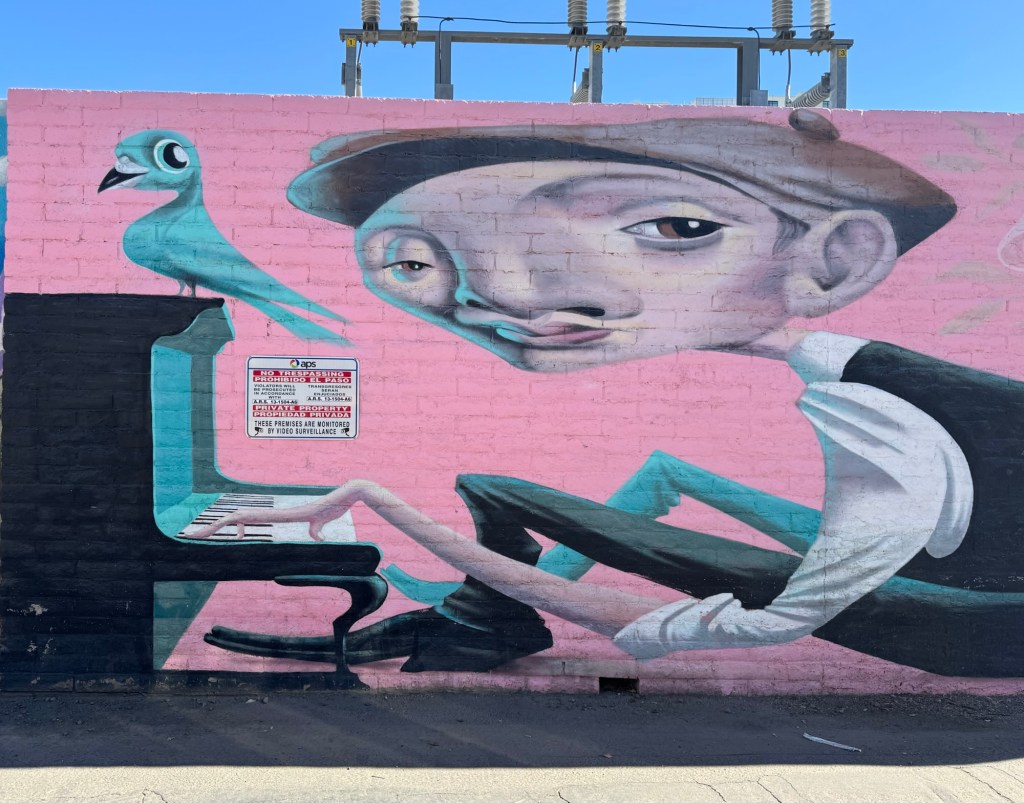
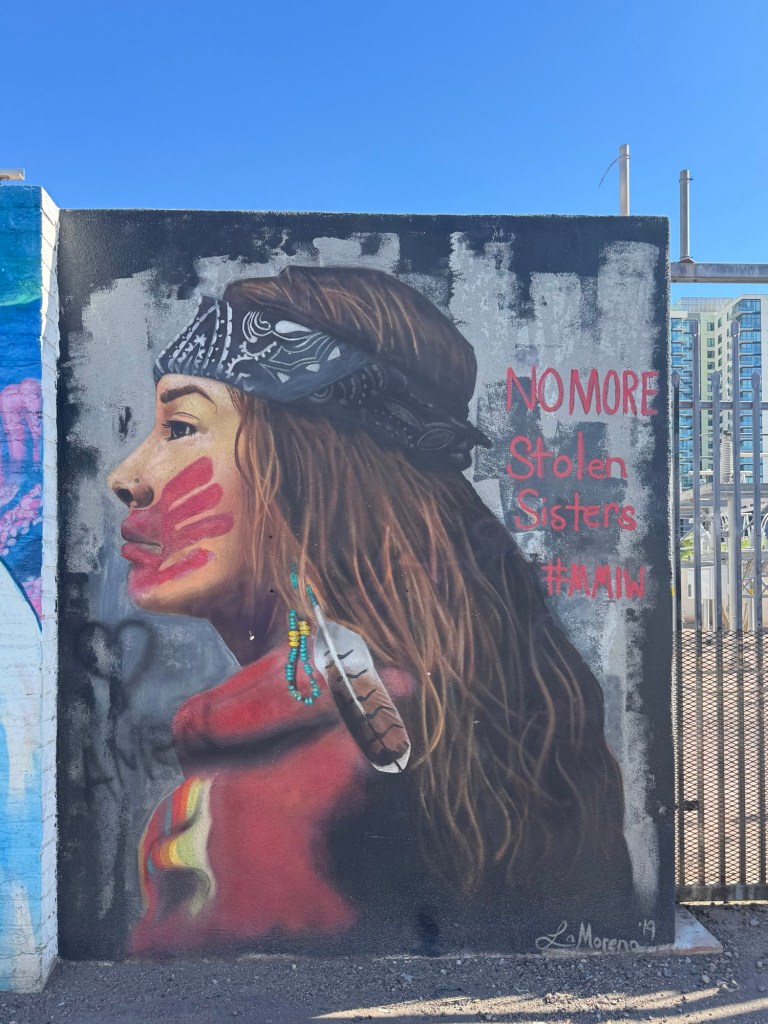
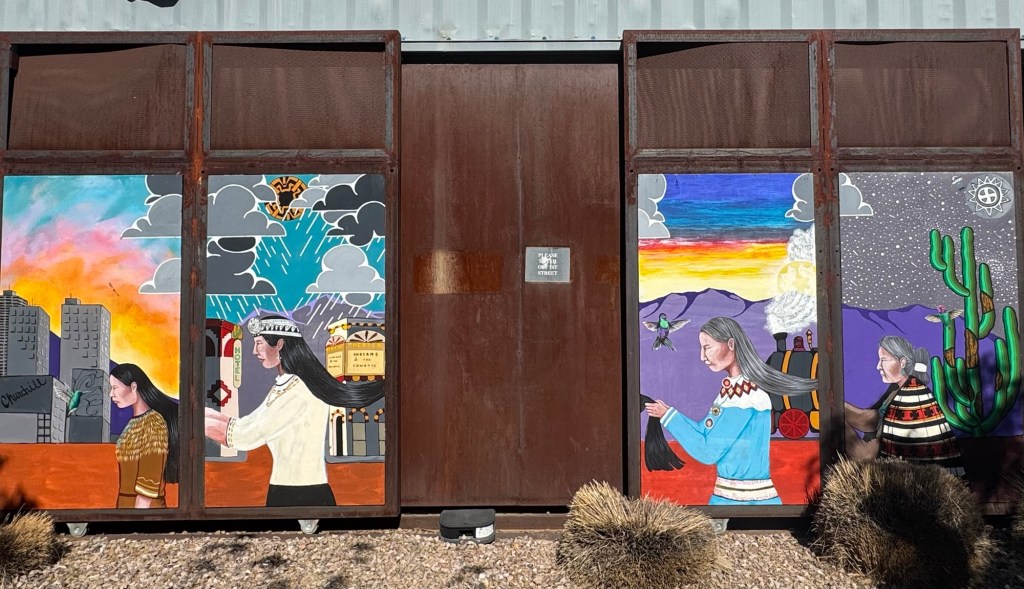
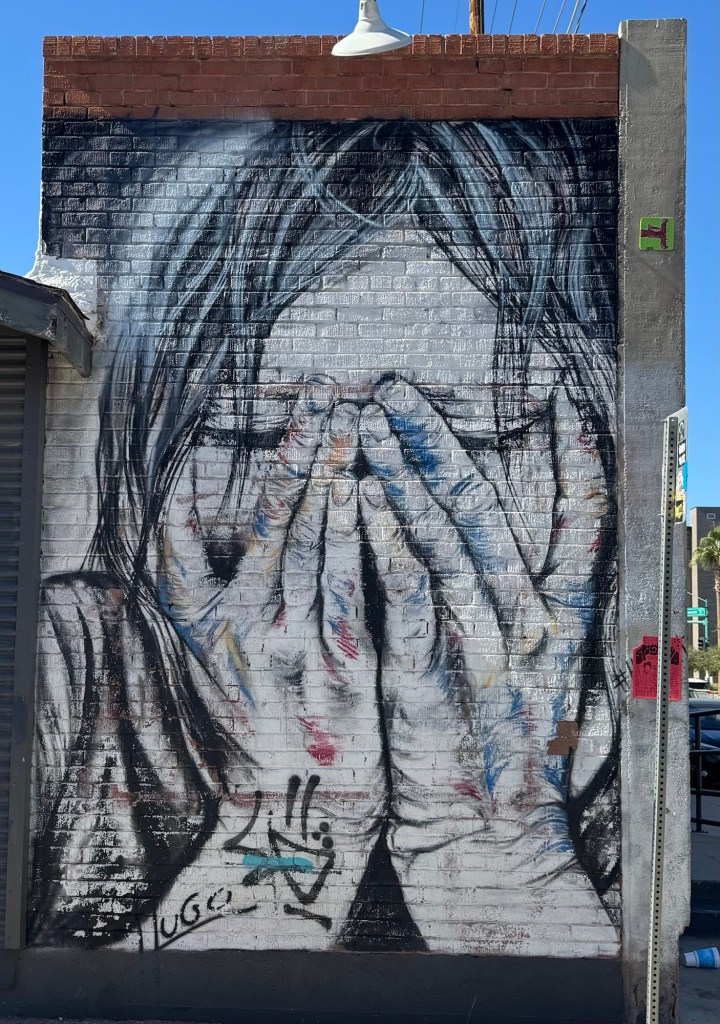

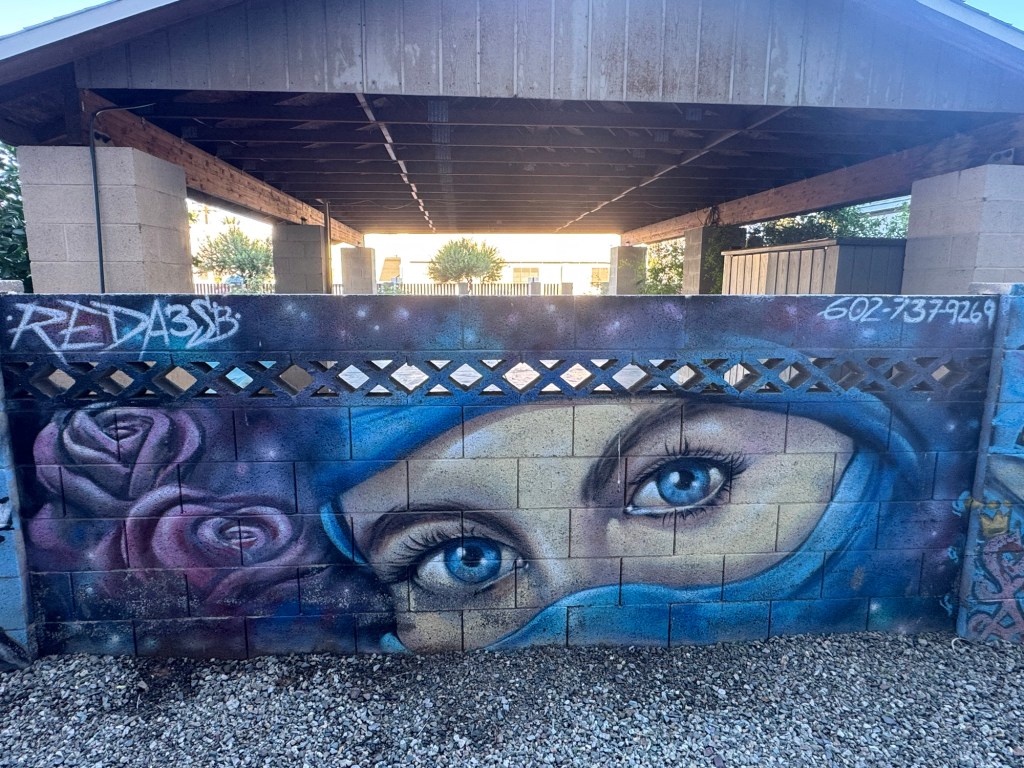
In just two days, Phoenix revealed five completely different sides of itself to me – quiet gardens, rich history, iconic architecture, vintage glamour, and vibrant street art. I also found it interesting that Julia, my friend from my Chicago days, and I explored three landmark places (the Heard Museum, Taliesin West and the Wrigley Mansion) which each had roots in Chicago. Phoenix is a whole lot better because of Julia’s move here. And, yeah, those other guys, Dwight, Frank and William’s move from Chicago enhanced Phoenix, too.
 New City New State
I learned even more from your blog than I did when we toured these places! I’m already planning our next tour adventure when you come back to town!
PS Thanks for encouraging me to go to the Japanese Friendship Garden! I really enjoyed it after all!
LikeLiked by 1 person