After several days in Lima, Peru we flew north to our second stop – Quito, Ecuador. Because Quito and Lima are both South America capital cities, I found myself comparing and contrasting the cities and countries quite often.
- Both countries are on the Pacific Ocean, but Lima is at sea level and Quito is at 9,000ft,
- Lima has a threat of earthquakes and tsunamis. Quito has a chance of earthquakes and volcanos,
- Peru was the last of the South American countries to declare its independence from Spain. Ecuador was the first and the reason why it’s called the “Light of America”,
- Since the United States had already gotten independence from Britain, “America” as used above, is referring to just South America. I find it ironic, because US residents use the generic term America to mean the United States,
- Both Peru and Ecuador were led to independence by Simón Bolívar who was born in Venezuela to Spanish descendants,
- Antonio José de Sucre was Bolívar’s right-hand man. He secured the victory at the Battle of Pichincha which won Ecuador their independence,
- Bolívar and Sucre’s names can be found not only in Ecuador and Peru, but all over Latin America. Bolivia and Ecuador both had currency named after Sucre.
Quito was once the northern capital for the Incan Empire, but when the Spanish conquistadors fought for the city in the mid 1530s, Rumiñawi, the leader of the Incas, ordered the city to be burned. The Spanish rebuilt on top of the ruins. Quito is one of the most extensive and best-preserved historic centres in South America. The streets are located on the original Incan (pre-Incan?) roads and are aligned on the cardinal points of the compass. The city was designated a World Heritage Site by UNESCO in 1978. For more information on Quito from the UNESCO website, click on the link below:
https://whc.unesco.org/en/list/2/
Now, onto my experience…
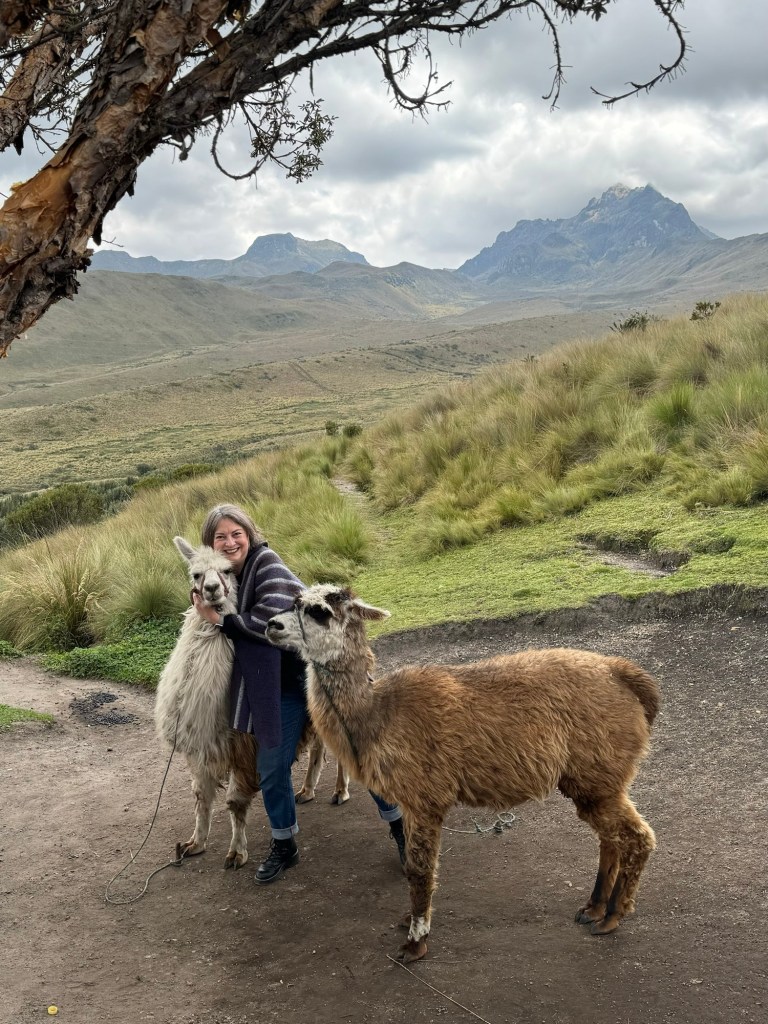
We didn’t have much time in Quito, so Don and I decided to split up for a day. He went on a guided local food tour – shopping, cooking, and eating. I chose to tour the city with a different guide. She and I took the gondola up the east side of Pichincha Volcano and hiked to the Cruz Loma lookout, toured the historic city on foot, and drove to the Virgin of El Panecillo. Still comparing and contrasting the two cities, I noticed that in both cities the cars are stick-shift, but the gas stations are different. In Lima I saw Repsol (a Spanish company) and the gas stations I saw in Quito were Shell (an American subsidiary of a Dutch company).


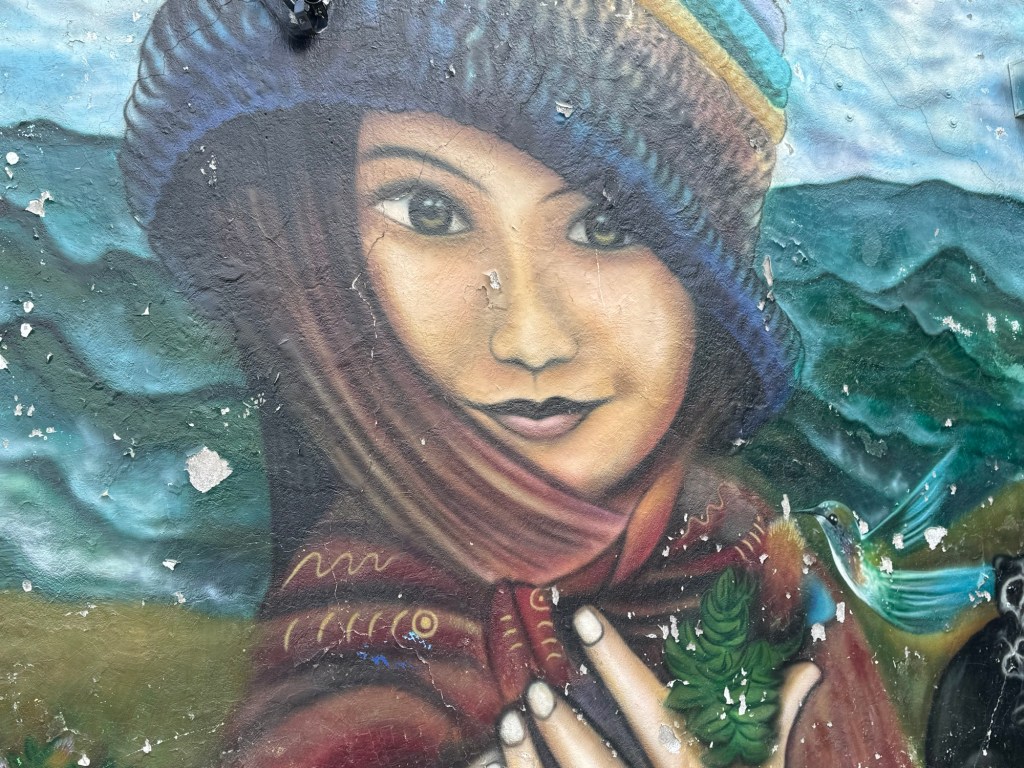


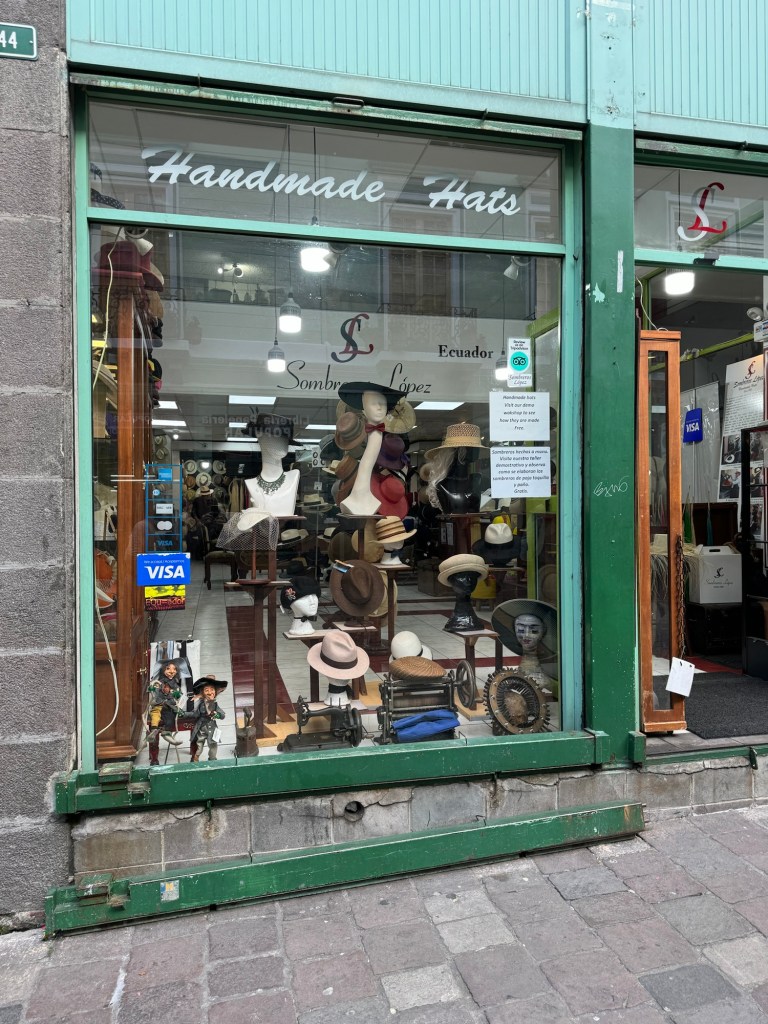

During the year between mid 1999 and mid 2000 Ecuador, and Quito specifically, had three major events. First, in May of 1999 a treaty was signed between Peru and Ecuador that recognized land near the Amazon that was lost to Peru in wars the previous century. Then an ash cloud rose from Volcano Pichincha in October 1999 which caused fear of eruption and respiratory problems from all the ash, and finally in March 2000 the Ecuadorian sucre (their currency) was converted to US dollars because of the rampant inflation caused by economic distress in 1998 and 1999. My guide talked about the overall stress that year from losing their land, their currency, and the fear of losing their homes, health and possibly dying from an eruption of their closest active volcano.
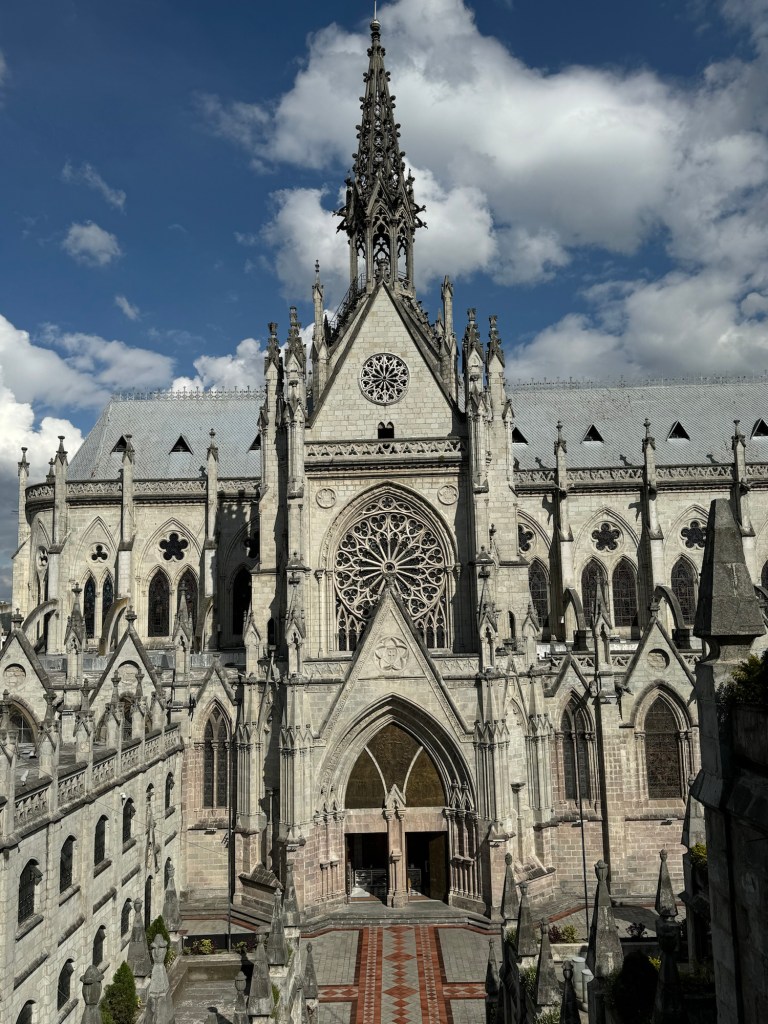
Basílica del Voto Nacional, the largest neo-Gothic basilica in the Americas. It is adorned with gargoyles as expected, but also, Ecuadorian animals: iguanas, condors, tortoises, and dolphins.


Our quick stop in Quito was beautiful, fun, eye-opening, and informative. We hope to be back to enjoy the cloud forest and other places near the capital city.
Next stop, The Galapagos!
 New City New State